

 By Editor
 The Nigeria Customs Service (NCS) has announced that all new recruits and eventually all serving officers will now undergo mandatory drug testing as part of efforts to strengthen professionalism and integrity within the service.
The Comptroller-General of Customs (CGC), Adewale Adeniyi, gave the directive in a statement issued on Tuesday in Abuja by the service spokesperson, Abdullahi Maiwada.
According to Adeniyi, the new policy is aimed at preventing individuals with substance-abuse tendencies from entering or remaining in the service, noting that such behaviours could compromise security operations and critical decision-making.
“We designed these measures to ensure that no recruit enters the service with substance-abuse tendencies that could compromise judgment, security responsibilities, or operational integrity,” he stated.
While the directive primarily targets the new intake of personnel, Adeniyi added that serving officers will also be tested as the service moves towards achieving a fully drug-free workforce.
He stressed that the tests scheduled to be conducted across all zones, commands and at the headquarters—reflect the NCS’s commitment to maintaining discipline and professionalism.
The CGC revealed that the decision followed reported incidents of erratic behaviour and poor judgment among some officers, later traced to substance misuse.
“There will be no compromise. We will ensure every new officer is tested so we do not begin to spend Service resources rehabilitating personnel,” Adeniyi said.
He added that the era of ignoring early warning signs of drug abuse among officers is over, emphasising that personnel responsible for revenue collection, enforcement, and border security must demonstrate sound judgment at all times.
Adeniyi also advised officers to prioritise their health through regular medical checks, noting that physical and mental fitness remain essential for efficient service delivery.
 CITAD Launches dComms as Privacy-Focused Alternative to Mainstream Social Media
  Aliyu Samba Presents Appointment Letter as A4A Parliamentary Mobilisation Secretary to Sen. Barau
  Kano Library Complex Transfer Will Boost Higher Education — NWU
 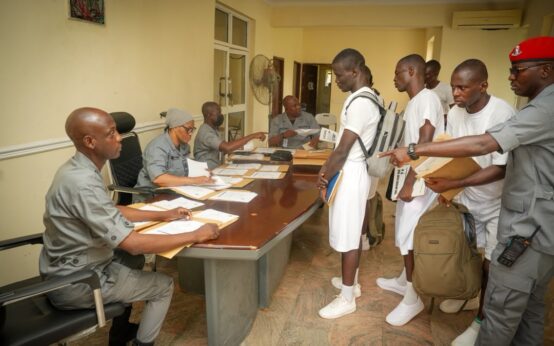 Customs Concludes 2025 Recruitment Screening, Nearly 3,000 Candidates Assessed
  37 Deaths in NSCDC Custody: Investigators Must Establish Truth, Justice — Retired DIG Gumel
  HJRDA MD Celebrates Remi Tinubu at 66, Highlights Women Empowerment