
 By Editor
 The Kano State Primary Health Care Management Board (KSPHCMB), in collaboration with Save the Children International through the BOOST Project, funded by GSK, and the Clinton Health Access Initiative (CHAI), has begun preparations for the state’s 2027 Routine Immunisation (RI) Work Plan, with a renewed focus on reaching children who have never received vaccines or remain under-immunised.
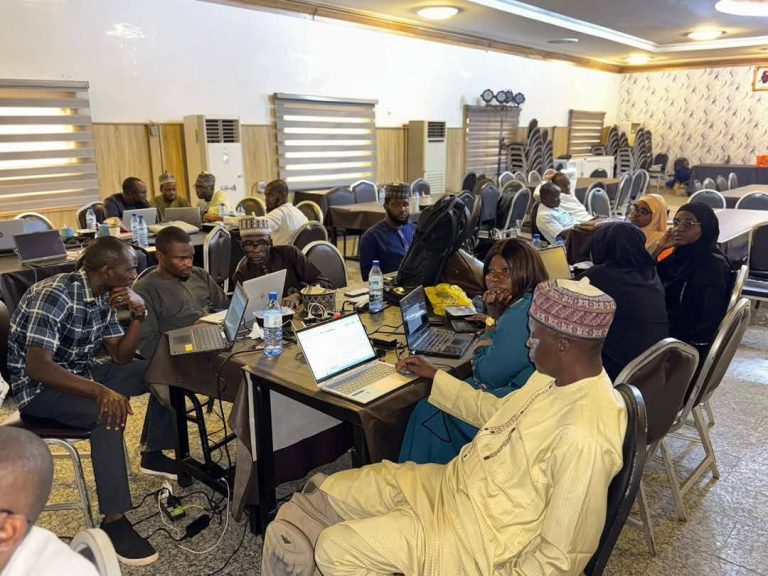
The stakeholders reached the decision during a two-day workshop in Kano, which brought together government officials, thematic leads, development partners and technical experts to review the implementation of the 2026 RI Work Plan and identify priorities for the 2027 immunisation strategy.
The workshop provided an opportunity for participants to examine programme performance, review available evidence and identify persistent gaps affecting immunisation coverage across the state.
Addressing the thematic groups, the Director of Disease Control and Immunisation, Dr. Tijjani Habibu, urged participants to critically assess the 2026 work plan and ensure that activities proposed for 2027 are firmly anchored on findings from the Situation Analysis (SITAN).
The thematic groups subsequently presented their proposed interventions for review, with participants providing technical observations and recommendations to ensure that planned activities respond directly to identified needs.
Discussions during the workshop highlighted key challenges affecting Routine Immunisation delivery, including weak partner coordination, programme management gaps, supply chain performance, supportive supervision, governance, financial accountability and data quality.
Participants emphasised the importance of establishing clear links between planned activities, available evidence, micro-plan data and measurable targets, while assigning clear ownership and accountability for implementation.
The Director-General of the KSPHCMB, Prof. Salisu Ahmed Ibrahim, challenged the thematic groups and Routine Immunisation partners to “change the narrative” in 2027 by tackling the underlying factors responsible for low immunisation coverage across Kano State.
Ibrahim placed particular emphasis on zero-dose Local Government Areas (LGAs), calling for targeted strategies to identify and reach children who have never received routine vaccines, as well as those who have missed recommended doses.
He also stressed the need for stronger coordination and accountability among government institutions and development partners to ensure that investments and interventions produce measurable improvements in immunisation coverage.
At the end of the workshop, thematic groups were tasked with completing outstanding revisions to the draft 2027 RI Work Plan, including activity alignment, costing, budgeting, ownership and partner contributions.
Stakeholders agreed that the final work plan must be evidence-driven, assign clear responsibilities to relevant actors, establish measurable outputs and strengthen monitoring mechanisms.
The workshop is part of broader efforts to improve Routine Immunisation delivery and promote equitable access to life-saving vaccines across Kano State, particularly in communities with high numbers of zero-dose and under-immunised children.
Through the BOOST Project, Save the Children International, with funding support from GSK, is supporting efforts to reduce the number of zero-dose and under-immunised children in Kano through targeted immunisation interventions, community engagement and advocacy.
Participants reaffirmed their commitment to closing existing immunisation gaps and ensuring that every eligible child in Kano State has access to essential vaccines.
 Kano Trains Veterinary Officers for Mass Livestock Vaccination, Unveils Digital Data Tracking System
  Governor Radda Receives National Award for Advancing Healthcare, Emerges Only Northern Governor Honoured
  Kano Targets 3.4 Million Children in Fresh Polio Immunisation Drive
  Tarauni LGA Vaccinates Over 7,000 Cattle in Free Livestock Health Campaign
  Kano DMCSA Partners Muslim Professionals to Boost Public Health, Showcases Major Financial Turnaround
  Tarauni Records Major Breakthrough as Over 66,000 Children Vaccinated in Polio Immunization Drive