
 By Editor
 By Ahmad Danyaro,Abuja
Housing is more than bricks and mortar. It is a cornerstone of dignity, economic opportunity, social stability and national development. Nations that have successfully transformed their housing sectors did more than construct homes—they built systems that made homeownership accessible, attracted investment and promoted sustainable urban growth.
For decades, Nigeria has struggled to achieve these goals.
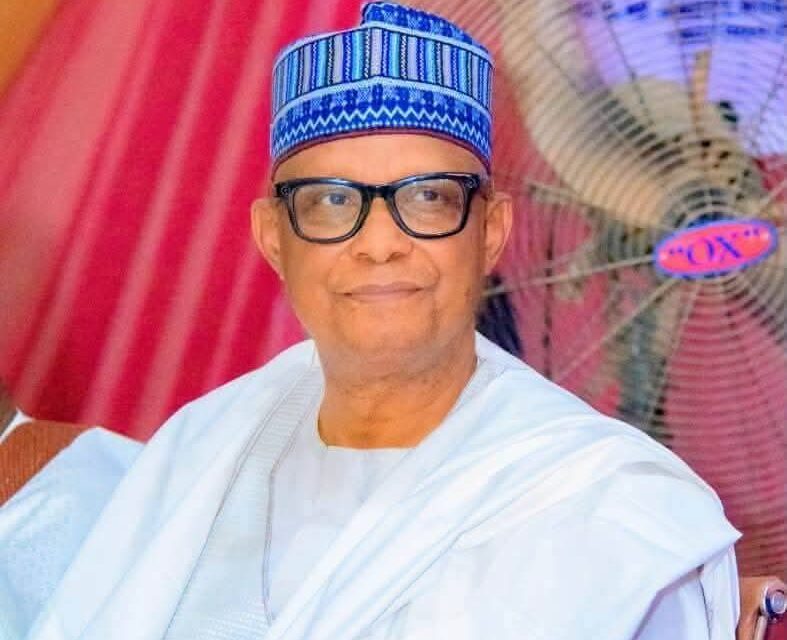
However, the first 100 days of Engr. Dr. Muttaqha Rabe Darma as Honourable Minister of Housing and Urban Development suggest that the country may be charting a different course.
Since assuming office on April 27, Dr. Darma has approached Nigeria’s housing crisis with the understanding that lasting solutions require more than commissioning housing estates. His administration has focused on tackling the structural issues that have long hindered housing delivery, including land administration, investment promotion, institutional coordination, industry regulation and social inclusion.
One of the administration’s most ambitious initiatives is the proposed nationwide Social Housing Programme, designed to provide affordable housing across all 774 Local Government Areas. If successfully implemented, the programme could significantly reduce Nigeria’s housing deficit while stimulating local economies through construction, infrastructure development and job creation.
Beyond expanding access to housing, the programme prioritises vulnerable groups, including women, children, victims of insecurity, internally displaced persons and communities affected by natural disasters.
In a country facing increasing displacement due to insecurity and climate-related disasters, the initiative reflects an effort to position housing as both an economic and social policy.
The minister has also placed strong emphasis on attracting private-sector investment to bridge Nigeria’s housing gap.
Acknowledging that government resources alone are insufficient, he has engaged international investors and development partners to mobilise financing and technical expertise.
His meetings with Japan’s CHODAI Company Limited and other prospective partners demonstrate an intention to position Nigeria as an attractive destination for housing and infrastructure investment. Around the world, successful housing programmes are driven by effective Public-Private Partnerships, and the minister appears determined to strengthen that model.
Perhaps the most significant aspect of Dr. Darma’s reform agenda is his focus on land administration.
Access to land has remained one of the biggest barriers to affordable housing in Nigeria. Slow registration processes, insecure land titles, bureaucratic bottlenecks and ownership disputes have discouraged investment and placed homeownership beyond the reach of many Nigerians.
To address these longstanding challenges, the minister has prioritised the Nigerian Land Titling, Registration and Documentation Programme (NLTRDP).
The proposed digitalisation of land records, deployment of Geographic Information Systems (GIS), electronic documentation and improved land administration are expected to enhance transparency, reduce processing time and strengthen confidence in land ownership.
While such reforms may not attract the same public attention as housing project commissioning ceremonies, they represent the institutional changes capable of transforming the housing sector over the long term.
Dr. Darma has equally demonstrated resolve in tackling the recurring challenge of building collapses through stronger regulation of Nigeria’s construction industry.
His commitment to ending quackery, enforcing professional standards and improving regulatory oversight underscores the importance of safety, accountability and professionalism in the built environment.
By advocating closer collaboration among regulatory agencies and professional bodies, the minister is seeking to ensure that future development is guided by strict compliance with building standards.
Institutional efficiency has also featured prominently during his first 100 days.
Through engagements with Federal Controllers of Housing across the country, Dr. Darma has emphasised improved project monitoring, stronger inter-agency coordination and greater accountability in project execution.
Though less visible to the public, these administrative reforms are essential for translating policy into tangible results.
Ultimately, however, the success of any administration will be measured by implementation rather than policy announcements.
Nigeria has seen ambitious housing programmes in the past that struggled because of inadequate funding, bureaucratic delays and inconsistent execution. The reforms initiated during these first 100 days must therefore be backed by transparency, measurable targets, sustained political will and effective stakeholder collaboration.
Nevertheless, the direction of the current reforms deserves attention.
Perhaps for the first time in years, the national conversation on housing is shifting beyond simply constructing houses to addressing broader institutional reforms involving land governance, digital transformation, investment attraction, professional regulation and inclusive urban development. This more holistic approach aligns with global best practices and recognises housing as both a social necessity and a catalyst for economic growth.
A vibrant housing sector generates employment, stimulates manufacturing, boosts construction, supports financial services and drives the growth of countless small businesses. It remains one of the strongest multipliers in any economy.
In his first 100 days, Engr. Dr. Muttaqha Rabe Darma has outlined an ambitious roadmap for Nigeria’s housing sector. His priorities are becoming clearer, and his early interventions indicate a willingness to confront many of the structural challenges that have hindered housing development for decades.
The road ahead will not be easy.
Expectations are high, resources remain limited and implementation will determine whether these reforms succeed.
But if the momentum of these first 100 days is sustained with consistency, professionalism and accountability, Nigeria’s housing sector could be on the threshold of meaningful transformation.
For millions of Nigerians still aspiring to own a decent and affordable home, that is a vision worth supporting.
Ahmad Danyaro is a media and public affairs analyst based in Abuja.
 Kano Veteran Journalists Back Gov Yusuf’s Anti-Drug Task Force, Pledge Support for Campaign Against Substance Abuse
  Kano Govt Intensifies Watari Water Plant Rehabilitation to Restore Water Supply in Five Communities
  Kano Police Launch Statewide Traffic Awareness Campaign, Warn of Strict Enforcement Against Violators
  Akwa Ibom CP Charges Officers on Discipline, Intelligence-Driven Policing
  Gov. Yusuf Inaugurates Sickle Cell Centre, Infectious Disease Lab, Distributes 3,000 BP Monitors in Kano
  Veteran Journalists in Kano Pledge to Uphold Media Ethics, Professionalism at Congress