
 By Editor
 By Ladan Nasidi, Kano
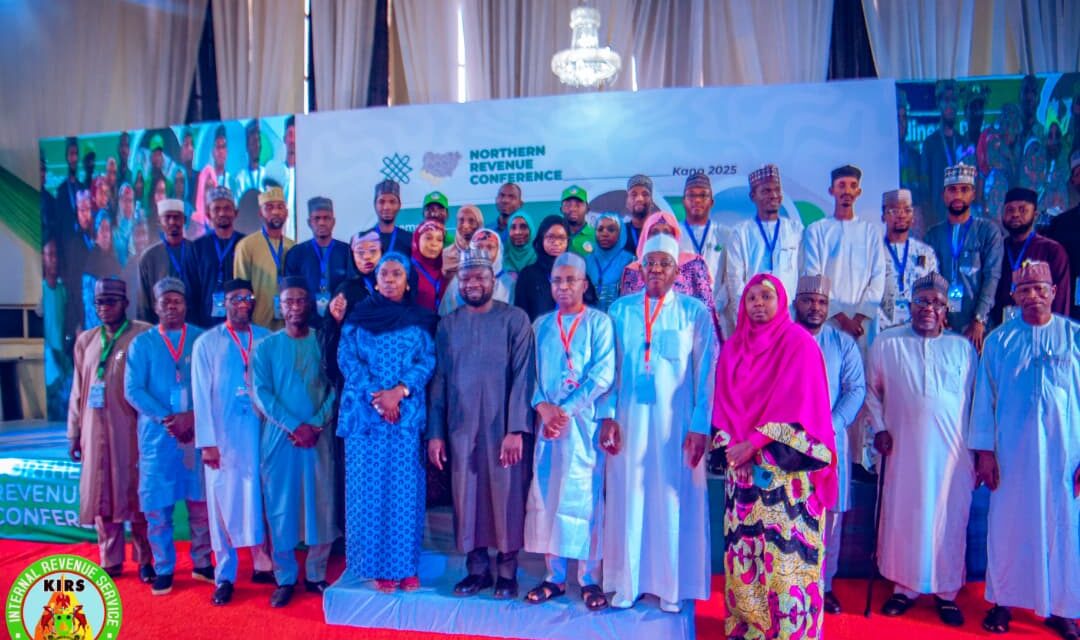
The Northern Revenue Conference has concluded in Kano with a strong call from stakeholders for the diversification of revenue sources and the adoption of digital tools to boost transparency and efficiency in tax administration across the region.
The two-day conference, themed “Readiness, Reforms and Digital Transformation,” brought together representatives from the 19 Northern States Internal Revenue Services, alongside officials from the Federal Inland Revenue Service (FIRS), the Federal Capital Territory Internal Revenue Service (FCT-IRS), and the Joint Tax Board (JTB).
Participants urged governments to expand their revenue base beyond traditional taxation by investing in agriculture, solid minerals, exports, tourism, and manufacturing. They also recommended the establishment of dedicated Non-Tax Revenue Departments to manage fees and levies, and the integration of non-tax revenue systems into digital platforms to enhance transparency.
The conference reaffirmed the commitment of Northern states to fully support the implementation of the 2025 Nigeria Tax Reform Acts, recently signed into law by President Bola Tinubu. These reforms aim to align Nigeria’s tax structure with global best practices while empowering subnational governments to strengthen their internally generated revenue (IGR).
However, participants highlighted that the autonomy of state revenue services remains limited by bureaucratic bottlenecks and inadequate fiscal independence. They called for the harmonisation of tax laws across the Northern region and a clearer separation of powers between tax authorities to streamline administration and reduce overlap.
Representing the FIRS Executive Chairman, Mr. Zacch Adedeji, the Secretary of the Joint Tax Board, Mr. Adesokan Olusegun, said the Federal Government’s ongoing tax reforms were designed to simplify tax processes, promote voluntary compliance, and create a fair and transparent system. He added that the Nigeria Tax Administration (Provisions) Act represents one of the most significant milestones in the country’s fiscal history, aimed at improving efficiency and equity in tax management.
Olusegun noted that the JTB is collaborating with state governments to align local tax laws with national reforms, curb multiple taxation, and stimulate economic growth across subnational entities.
In his remarks, Dr. Zaid Abubakar, Chairman of the Kano State Internal Revenue Service (KIRS), described the conference as a milestone in Northern Nigeria’s journey toward modern, data-driven tax administration.
He urged state revenue agencies to embrace digital transformation and institutional reforms to enhance efficiency and service delivery, stating:
“The 2025 reforms demand precision, digital competence, and bold leadership. The era of guesswork in tax administration is over.”
Dr. Abubakar further encouraged participants to use the conference as a platform for collaboration, knowledge sharing, and building a more taxpayer-friendly revenue system that drives sustainable development in Northern Nigeria.
 Abuja-Kaduna-Kano Highway to Boost Trade, Connectivity in Northern Nigeria — Umahi
  Kano Governor Yusuf Nominates Five Commissioner-Designates for Assembly Screening
  2027: ADC-PCC Urges Nigerian Youths to Reject Tinubu’s Re-election Bid
  DAVID MARK MOURNS EX-DELTA GOV UDUAGHAN
  Nigeria Customs, Afreximbank Deepen Regional Border Modernisation Drive to Boost AfCFTA Trade
  Group Prays for Speedy Recovery of Abdulsalami, Sen. Musa