
 By Editor
The Nigeria Customs Service (NCS), in collaboration with the Customs administrations of the Republic of Benin and the Republic of Cameroon, has intensified efforts to modernise strategic regional border corridors through high-level engagements with the African Export-Import Bank (Afreximbank), in a move aimed at facilitating cross-border trade and advancing the objectives of the African Continental Free Trade Area (AfCFTA).
The engagement, held at Afreximbank’s headquarters in Cairo, Egypt, on 12 October 2026, brought together the Comptroller-General of Customs, Bashir Adewale Adeniyi, MFR; representatives of the three Customs administrations; Afreximbank officials; and technical partners to review findings from recent border assessments and explore practical strategies for an integrated regional border-modernisation programme.
The meeting followed a joint benchmarking mission to the Beitbridge Border Post in Zimbabwe in July 2026, alongside technical assessments of the Mfum–Ekok and Sèmè–Kraké border corridors connecting Nigeria with Cameroon and Benin, respectively.
Discussions centred on strengthening border infrastructure, harmonising Customs procedures, improving digital connectivity and promoting secure data exchange to enhance the efficiency, security and predictability of cross-border trade.
Participants identified key infrastructure requirements, including cargo scanners, weighbridges, access roads, reliable electricity, information technology facilities, traffic management systems and modern border-processing infrastructure. They also emphasised institutional capacity development, sustainable maintenance arrangements and effective coordination among border agencies as essential elements of successful border modernisation.
The meeting further explored Afreximbank’s potential participation in the next Customs Partnership for African Cooperation in Trade (C-PACT), alongside ongoing efforts to establish regional and continental transit-guarantee arrangements to facilitate the movement of goods across African borders.
A major highlight of the engagement was the proposed Customs Declaration Exchange System (CDES), a digital initiative designed to facilitate secure information exchange among Nigeria’s B’Odogwu platform, Benin’s Customs Webb and Cameroon’s CAMCIS.
Built around a common data model, the proposed system is expected to enable export information generated in one country to support the advance preparation of import-manifest information in the destination country. This approach is intended to minimise repetitive data entry, improve information accuracy and make cross-border transactions more efficient and predictable.
Under the proposed arrangement, the receiving Customs administration will retain full responsibility for validating submitted information, enforcing national regulatory requirements, conducting risk assessments and authorising the clearance of goods.
Although development and technical testing of the system have been undertaken, further work is required before deployment. Outstanding requirements include country-specific configuration, application programming interface integration, security assurance and pilot acceptance by the participating Customs administrations.
Findings from the Beitbridge benchmarking mission and technical assessments of the two priority corridors provided the foundation for discussions on the proposed modernisation programme.
The Beitbridge experience demonstrated the importance of approaching border modernisation as an integrated operational system rather than a collection of independent infrastructure projects. Critical components include effective traffic management, pre-arrival processing, risk-based inspections, cargo scanning, transit monitoring, electronic payments, information technology command centres, reliable utilities, maintenance systems and clear governance arrangements.
At the Mfum–Ekok border corridor linking Nigeria and Cameroon, the assessment identified challenges involving electricity supply, connectivity, information technology equipment, cybersecurity, technical support, scanner commissioning and coordinated single-stop border processing.
Similarly, the Sèmè–Kraké corridor between Nigeria and Benin faces operational constraints, including incomplete joint procedures, limited real-time data exchange, non-functional cargo-scanning and weighing facilities, unreliable electricity, traffic congestion, inconsistent operating hours and unresolved responsibilities for maintaining shared infrastructure.
The findings highlighted the need for immediate operational improvements, supported by a comprehensive, properly assessed and costed long-term investment programme to ensure that modernisation efforts deliver sustainable results.
To advance the initiative, Afreximbank outlined a proposed two-stage approach beginning with independent engineering assessments and investment-cost studies at the Mfum–Ekok and Sèmè–Kraké border posts.
The second stage would involve preparing separate bankable project packages for the Nigeria–Cameroon and Nigeria–Benin corridors. The proposed project-preparation process would cover transaction advisory services, legal due diligence, financial modelling and the identification of suitable implementation and financing arrangements.
Afreximbank also highlighted the potential use of its Project Preparation Facility to support the development of the proposed projects.
Meanwhile, technical partners, TMP and Bergmans Security Consultants and Supplies Limited, expressed willingness in principle to consider self-financing the preparatory work.
However, no final project cost, lending commitment, designated borrower, financing arrangement or implementation contract was established during the engagement.
To sustain momentum, participants underscored the importance of conducting direct site inspections, appointing designated technical focal points, developing a one-, three- and six-month implementation roadmap, and establishing a dated action matrix to guide follow-up activities and monitor
The Nigeria Customs Service, under the leadership of Comptroller-General of Customs Bashir Adewale Adeniyi, MFR, reaffirmed its commitment to strengthening regional cooperation, modernising border operations and facilitating legitimate trade in line with the objectives of the African Continental Free Trade Area.
The Service will continue to collaborate with the Customs administrations of Benin and Cameroon, Afreximbank and relevant technical partners to advance the required assessments, clarify project-preparation arrangements and develop practical, sustainable solutions for the two border corridors.
The proposed interventions are expected to contribute to more efficient cross-border procedures, improved cargo visibility, stronger coordinated border management and a more predictable trading environment for businesses operating across the region.
Through these collaborative efforts, the Nigeria Customs Service and its regional partners are working towards a more integrated African trading system in which modern border infrastructure, digital Customs processes and institutional cooperation support legitimate trade, regional economic integration and the broader aspirations of the African Continental Free Trade Area.
The statement was issued by Customs Public Relations Officer, Abdullahi Maiwada, PhD, mnipr, mniia, Deputy Comptroller of Customs and National Public Relations Officer, on behalf of the Comptroller-General of Customs.
 Group Prays for Speedy Recovery of Abdulsalami, Sen. Musa
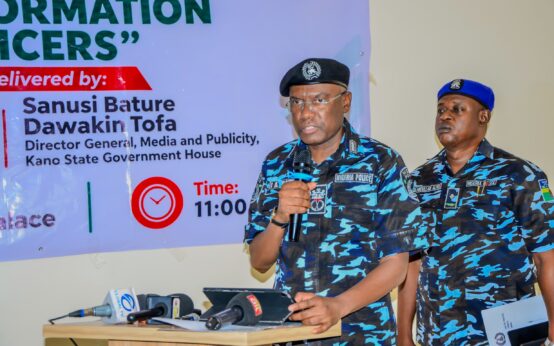 2027 Elections: Kano Police Assure Robust Security, Warn Against Fake News
 Kano Governor Urges Oyebanji to Sustain People-Centred Governance, Strengthen National Unity
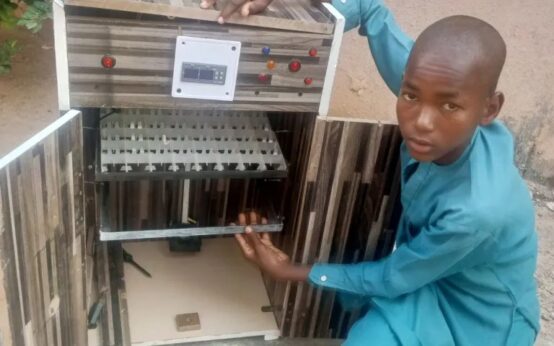 Kano Youth Mustapha Idris Muhammad Seeks Support to Build Egg Incubator Machines
 Tinubu Appoints Adeleke Osun Coordinator of Presidential Campaign Council, TICC Pledges 1.5m Votes
 Putin Conveys Iran’s Peace Proposal to Trump as Moscow Offers to Take Tehran’s Enriched Uranium