
 By Editor
 There was a time when navigating Kano during peak hours was less a journey than a test of patience.
From Dan’Agundi to Tal’udu, and across the metropolitan roads stretching into the city’s expanding outskirts, motorists routinely faced traffic bottlenecks, lengthy queues and deteriorating road surfaces.
For Kano, one of Nigeria’s major commercial centres, the consequences went far beyond the frustration of being stuck in traffic. The movement of people, goods and services is central to the city’s economy, making an efficient road network critical to everyday life and business.
But across parts of the metropolis, that story is beginning to change.
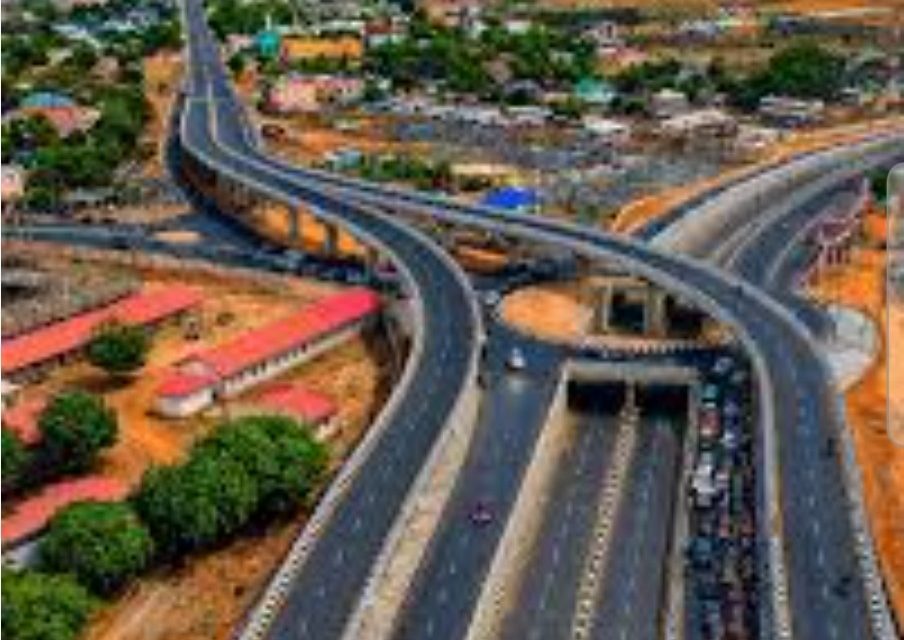
Major road construction and rehabilitation projects are transforming the city’s transport landscape, alongside the emergence of modern flyovers, overhead bridges and other critical infrastructure designed to ease traffic and improve connectivity.
Perhaps the most visible signs of this transformation are the flyovers rising at some of Kano’s busiest intersections.
The Dan’Agundi and Tal’udu flyovers have emerged as prominent symbols of an approach to urban infrastructure that goes beyond conventional road construction, reflecting the growing need for transport systems capable of serving a rapidly expanding metropolis.
Their significance, however, extends far beyond concrete pillars, ramps and elevated carriageways.
For a trader moving goods across the city, a commercial driver trying to complete several trips in a day, a worker commuting to the office or a resident travelling to school or a hospital, time spent in traffic carries a real cost.
Every minute saved on a congested road can translate into greater productivity, fewer delays and more efficient movement of goods and people.
This is why the impact of Kano’s road projects should not be measured solely by the size or appearance of the structures being built. Their real value lies in how effectively they improve mobility and make everyday journeys faster, safer and more predictable.
As Kano continues to grow, so too does the pressure on its transport infrastructure. More residents, businesses and vehicles inevitably place greater demands on roads that were designed for a smaller and less congested city.
The emergence of modern flyovers and the rehabilitation of key roads therefore represents more than a physical facelift for the metropolis. It points to an attempt to anticipate the demands of a city whose population, commercial activity and urban footprint continue to expand.
For residents who have spent years navigating notorious traffic points, the changes are particularly significant.
Where long waits once defined peak-hour movement, new infrastructure offers the prospect of smoother traffic flows and shorter travel times.
And for a commercial hub such as Kano, improved mobility could have implications far beyond the daily commute.
Efficient roads can help businesses move goods more quickly, reduce time lost in transit and improve access between residential communities, markets and commercial districts.
The road to a more efficient Kano is still under construction, but the changing skyline of its major intersections suggests that the city is beginning to build for the future.
The flyovers may be made of concrete and steel, but their ultimate measure of success will be much more human: how many hours they return to residents, how much time businesses save and how much easier it becomes for people and goods to move through Kano.
 NAPTIP Rescues Over 180 Children After PREMIUM TIMES Investigation Uncovers Trafficking Under CSO Cover
  CGC Adeniyi Inspects Kano Customs Training Facility Ahead of Recruits’ Arrival
  Kano Police Assures Peaceful 2027 Elections, Begins Security Preparations
  Customs, ACSPN Strengthen Partnership on Media, Digital Communication
  Hadejia-Jama’are Basin Authority Empowers 50,000 Farmers, Women, Youths in Kano, Jigawa, Bauchi
  Kano Police Deploy 250 Newly Trained Officers to Border LGAs