

 By Editor
 By DIG Mohammed Usaini Gumel
President Bola Ahmed Tinubu’s vision of building a US$1 trillion Nigerian economy is far more than an ambitious economic target. It is a national call to transform Nigeria into a globally competitive economy driven by investment, industrialisation, innovation, productivity and inclusive prosperity.
The Federal Government has taken important steps in this direction, prioritising macroeconomic reforms, infrastructure renewal, tax reform, fiscal discipline, food security, energy transition, digital innovation and investment promotion. These reforms are essential.
But beneath every successful economic reform lies one fundamental requirement: security.
No economy can achieve sustainable growth where citizens, businesses and investors cannot operate with confidence. Investors need certainty.
Farmers need safe access to their land. Manufacturers need secure supply chains. Traders need safe roads and markets. Children need peaceful communities in which to learn.
Infrastructure requires a secure environment to be built, maintained and utilised.
In other words, security is not merely a law-enforcement concern; it is an economic enabler.
Nigeria’s security challenges are often experienced most acutely at the community level, across the country’s 774 Local Government Areas (LGAs). This reality points to an important principle: if insecurity manifests locally, sustainable solutions must also have a strong local foundation.
This is the central philosophy behind Project 774 Network.
The Network advocates the activation of every Local Government Area as an organised partner in security, responsible citizenship and sustainable development. It seeks to strengthen collaboration among communities, traditional institutions, religious organisations, local governments, civil society, the private sector and statutory security agencies.
The objective is not to create parallel security structures or replace existing institutions.
Rather, it is to strengthen the security architecture that already exists by creating stronger channels for community engagement, responsible intelligence sharing, early warning, conflict prevention and community resilience.
Security Is Economic Infrastructure
Nigeria must begin to view security in the same strategic context as roads, electricity, telecommunications and other forms of economic infrastructure.
A secure farming community can produce more food.
A secure road corridor can move goods and people more efficiently.
A secure market can support greater commercial activity.
A secure school can develop the human capital Nigeria needs for the future.
A secure industrial environment can attract investment and create jobs.
A secure community can retain businesses, encourage innovation and generate prosperity.
This is why grassroots security should be regarded as productive capital, rather than simply as a cost to government.
The economic consequences of insecurity extend far beyond the immediate threat to lives and property. Insecurity disrupts agricultural production, raises transportation and insurance costs, damages infrastructure, weakens investor confidence, displaces communities, interrupts education and places additional pressure on public finances.
Conversely, improving security at the grassroots can unlock economic activity that is already latent within communities.
From Reactive Security to Preventive Security
Nigeria’s security strategy must increasingly move beyond responding to threats after they occur. Prevention, early warning and community resilience must become central elements of the national security-development framework.
People living within communities are often the first to observe emerging tensions, unusual movements, disputes, criminal patterns or other warning signs. Properly structured and responsibly managed, this local knowledge can complement the capabilities of professional security agencies.
The role of communities, therefore, should not be reduced to providing information after a crisis has begun. Communities can become active partners in prevention, early warning, peacebuilding and resilience.
This requires trust.
It requires clearly defined responsibilities.
It requires technology.
It requires accountable leadership.
And above all, it requires a coordinated framework that connects local knowledge with the appropriate government and security institutions.
Project 774 Network seeks to advance this approach by providing a platform through which Local Government Areas can become more organised partners in national security and development.
The 774-LGA Opportunity
Nigeria’s 774 Local Government Areas represent not only administrative units but also an enormous network of communities, economic activities, institutions and human capital.
Every LGA has farmers, traders, artisans, entrepreneurs, professionals, young people, women’s groups, traditional leaders, religious institutions and community organisations. These networks constitute a powerful national resource.
If properly coordinated, they can contribute to a more resilient Nigeria.
Imagine a national framework in which every Local Government has a functioning security-development partnership; where communities participate in early-warning mechanisms; where responsible information-sharing channels connect citizens with security institutions; where local authorities work with traditional and religious leaders to prevent conflicts; and where technology supports timely responses to emerging threats.
Such a framework would not only improve security. It could also create the confidence necessary for economic activity to expand.
Making Security Part of Economic Planning
The pursuit of a US$1 trillion economy therefore requires security to be integrated into national and subnational economic planning.
When government plans an agricultural programme, the security of farming communities and agricultural corridors must be considered.
When industrial zones are developed, the security of workers, logistics networks and surrounding communities must be considered.
When roads and transport corridors are constructed, their long-term security must be part of the investment equation.
When schools and healthcare facilities are established, their protection and community ownership must be considered.
Economic planning and security planning cannot continue to operate in separate compartments. They are two sides of the same development equation.
This is where grassroots security architecture becomes strategically important.
A Partnership for the Renewed Hope Agenda
Project 774 Network complements the objectives of the Renewed Hope Agenda by focusing on one of the conditions upon which its economic ambitions depend: a stable and secure environment in which Nigerians can work, invest, innovate and prosper.
The initiative is founded on partnership rather than duplication; coordination rather than competition; prevention rather than reaction; and development rather than dependency.
The Federal Government cannot secure every community alone. Nor should communities be expected to confront complex security challenges without the support of legitimate state institutions.
What is required is a whole-of-society approach in which government, security agencies, communities, traditional institutions, religious bodies, civil society and the private sector work together within clearly defined and accountable structures.
Nigeria’s economic transformation will ultimately be measured not only by the size of its GDP, but by whether ordinary Nigerians can live securely, farm productively, conduct business confidently, educate their children and participate meaningfully in the nation’s prosperity.
That transformation must therefore reach beyond Abuja and the major economic centres. It must reach every community.
Nation-building begins in the communities.
Security begins in the communities.
Economic opportunity begins in the communities.
And the road to Nigeria’s US$1 trillion economy runs through all 774 Local Government Areas.
If Nigeria can activate its grassroots communities as responsible partners in security and development, it will not merely be protecting its economy it will be creating the conditions for that economy to grow.
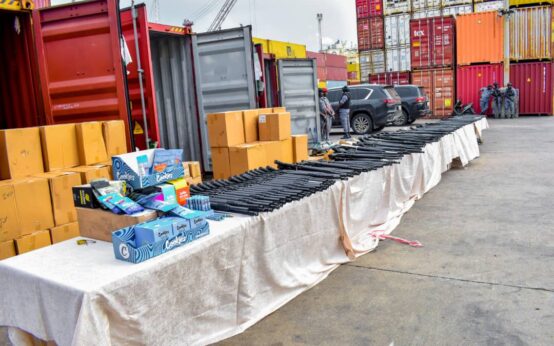 Nigeria Customs Completes Coupling of Seized Tincan Port Shipment, Uncovers 399 Jojef Rifles
 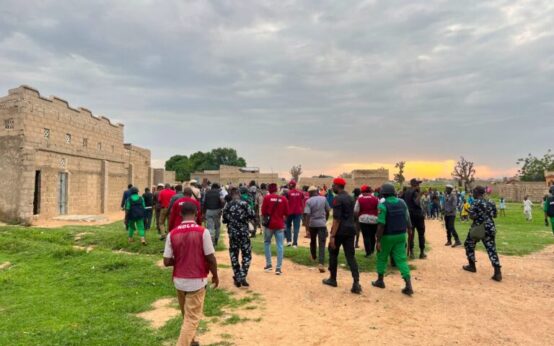 Kano Drug Task Force Arrests 28, Dismantles Five Suspected Drug Joints in Tofa
  AfCFTA Secretary-General Hails Customs’ Digital Reforms, Seeks Africa-wide Adoption of Nigerian Innovation
  Senate Hails Customs Reforms, Backs Adeniyi’s Technology-Driven Modernisation Agenda
  Kano Govt Spends N1.5bn on Mass Wedding for 1,500 Couples
  FG’s Agricultural Push Will Strengthen Nigeria’s Food Security – Dr.Salisu Salisu