
 By Editor
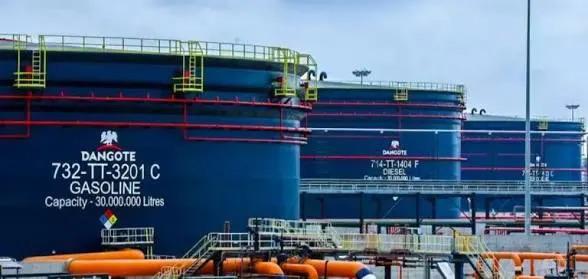
 The Dangote Petroleum Refinery has temporarily halted gasoline (petrol) exports as it shifts focus to supplying the Nigerian market, according to sources familiar with the development.
The move comes as the 650,000-barrels-per-day refinery continues to play a dominant role in Nigeria’s downstream petroleum sector, with industry stakeholders suggesting the decision could strengthen local fuel availability in the short term.
A source with direct knowledge of refinery operations disclosed that the suspension of exports is intended to prioritise domestic supply. However, no official timeline has been announced for when overseas shipments will resume.
The development has sparked discussions across the petroleum industry, particularly as it coincides with reports of operational challenges affecting key processing units within the refinery.
Petroleumprice.ng had earlier reported ongoing maintenance activities at sections of the facility, with market observers indicating that the work could temporarily impact production volumes and export capacity.
Although Dangote Refinery has yet to issue an official statement on the export suspension, industry sources believe the decision may be linked to a combination of reduced output from critical refining units and broader operational adjustments aimed at stabilising production.
Attention has focused on the refinery’s Residual Fluid Catalytic Cracking (RFCC) unit, a key component in gasoline production.
According to Reuters, citing independent energy intelligence firm IIR Energy, the unit has been operating at approximately 66 per cent of its capacity since late May.
IIR Energy projected that the unit could return to full capacity by mid-June, although experts note that recovery timelines for complex refining systems often depend on technical and operational conditions.
The production challenges reportedly followed two incidents within the RFCC unit.
One involved the processing of lighter-than-expected crude grades, which reduced feedstock availability, while the second related to a mechanical fault affecting a flue gas control valve.
The RFCC unit is crucial to the refinery’s operations, converting heavy petroleum fractions into higher-value products such as gasoline, diesel and liquefied petroleum gas (LPG).
Recent export figures underscore the scale of the slowdown. Gasoline exports reportedly declined sharply from about 81,000 barrels per day in April to roughly 10,000 barrels per day in early June, reflecting significantly lower export volumes.
Industry analysts believe the combination of lower production levels, technical adjustments and shifting operational priorities may have contributed to the export suspension, although no official confirmation has been provided by the refinery.
The development could also impact regional fuel markets, particularly across West Africa, where Dangote Refinery has emerged as a major supplier of refined petroleum products since commencing petrol production.
Since beginning operations, the refinery has significantly altered fuel trade patterns across the region while intensifying competition within Nigeria’s downstream oil sector.
Market participants say the temporary redirection of fuel volumes to the domestic market could help improve local supply conditions.
However, the overall effect will depend on how long the export suspension remains in place and the refinery’s ability to restore full operational capacity.
Analysts further caution that fuel supply and pricing dynamics will continue to be influenced by external factors, including global crude oil prices, foreign exchange fluctuations and logistics costs across the petroleum value chain.
Industry stakeholders are expected to closely monitor developments in the coming weeks as operational conditions at the refinery continue to shape both domestic fuel supply and regional petroleum trade flows.
 NRS to Build Tax System That Supports and Drives Economic Growth in Nigeria— Adedeji
  NEPC Urges Kano Farmers to Process Soybeans for Export, Says Nigeria Losing Millions in Raw Produce Trade
  Niger State Hands Over 500 Hectares to Abuja Steel Mills for Solar Farm, Industrial Park
  Kebbi Unveils Investor-Friendly Reforms to Drive Economic Growth, Attract Investments
  Dangote Cement Deploys AI, Advanced Safety Systems as Truck Crashes Drop 56%
  Niger State Seeks Dangote, Private Investors’ Partnership in Bida Basin Oil Exploration