
 By Editor
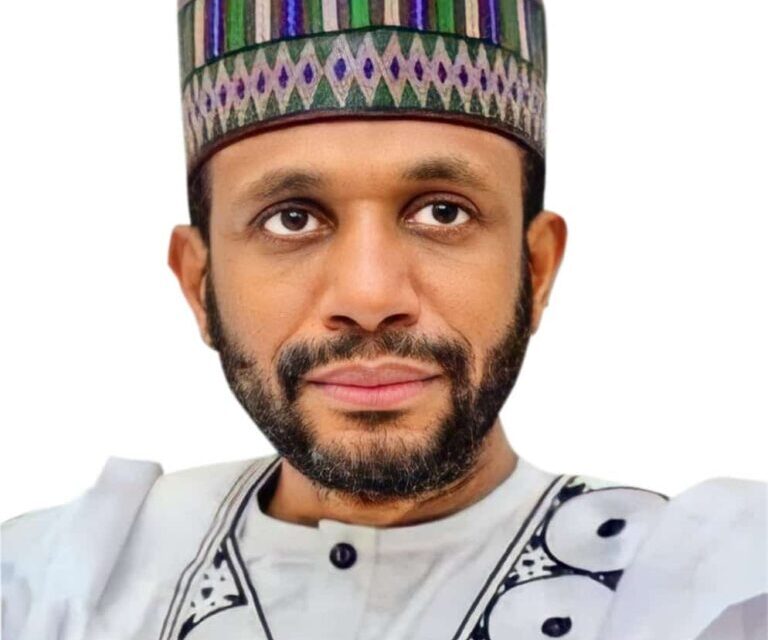
 When Murtala Sule Garo took the oath of office as Deputy Governor of Kano State on May 5, 2026, he stepped into a position that had suddenly acquired unusual political weight.
The vacancy followed the resignation of his predecessor, Aminu Abdussalam Gwarzo, after Governor Abba Kabir Yusuf’s move from the New Nigeria People’s Party (NNPP) to the All Progressives Congress (APC).
Garo’s emergence therefore came at a defining moment in Kano politics, as the state’s political establishment underwent one of its most significant realignments in recent years.
But 100 days into his tenure, the more revealing question is no longer how Garo came into office. It is what he has done with it.
From representing Governor Yusuf at high-level engagements with international development partners and national institutions to articulating the administration’s positions on poverty, entrepreneurship, education, social protection and investment, Garo has steadily settled into a role that is often understated but critical to the functioning of government: serving as the governor’s trusted representative and executive partner.
His first 100 days have therefore been less about building a separate political identity and more about establishing himself firmly within the Yusuf administration’s governing structure.
That role received its clearest political endorsement on July 13, when Governor Yusuf announced Garo as his running mate for the 2027 governorship election.
Yusuf said the decision was based on Garo’s loyalty, commitment and performance since assuming office, while expressing confidence in his ability to continue supporting the administration’s objectives.
For a deputy governor, few political endorsements carry greater significance.
From Political Operator to Executive Partner
Garo did not arrive at Government House without considerable political and administrative experience.
Before his appointment as deputy governor, he served as Chairman of Kabo Local Government Area, Chairman of the Association of Local Governments of Nigeria in Kano State and Commissioner for Local Government and Chieftaincy Affairs. He was also the APC’s deputy governorship candidate in the 2023 election.
At the time of his nomination, he was widely regarded as a seasoned political administrator with more than two decades of experience in elective and appointive positions.
The deputy governorship, however, presented a different kind of challenge.
Political mobilisation and executive administration require different skills.
The former depends heavily on coalition building, persuasion and political organisation.
The latter requires institutional discipline, policy understanding, communication and the ability to accurately represent government decisions and priorities.
Garo’s first 100 days suggest that he has approached the transition by working within the governor’s agenda rather than attempting to establish a parallel centre of power.
His acceptance speech at his swearing-in ceremony offered an early indication of that approach.
He described his appointment as a call to service, pledged loyalty and cooperation to Governor Yusuf and said his responsibility was to support the administration’s “Kano First” agenda and help ensure that government policies translated into meaningful results for citizens.
That emphasis on teamwork has remained a recurring feature of his public engagements.
The Deputy Governor as the Governor’s Voice
One of the clearest patterns of Garo’s first 100 days has been the frequency with which he has represented Governor Yusuf at important engagements.
Some of those appearances were ceremonial. Others were substantially connected to policy and development.
In June, Garo represented the governor during an engagement with a high-level delegation of European Union Heads of Mission and their deputies led by the EU Ambassador to Nigeria and ECOWAS, Gautier Mignot.
The meeting included representatives of the EU, UNICEF, GIZ, Plan International, UN-Habitat and other development partners.
According to UNICEF’s account of the engagement, discussions with Garo touched on urban development, opportunities for young people and social inclusion.
Kano also presented its Urban Development Strategy, developed with technical support from UN-Habitat, focusing on sustainable urban growth, resilience, infrastructure planning, social cohesion and economic opportunities.
The engagement highlighted an often-overlooked responsibility of the deputy governor’s office: communicating the state’s priorities to institutions whose technical expertise and development partnerships can influence outcomes across the state.
The same pattern was evident during the North-West Governors’ Forum policy dialogue on multidimensional poverty.
Garo represented Governor Yusuf at the high-level meeting, which brought together governors, federal officials, development partners, traditional and religious leaders, private-sector representatives and other stakeholders.
UNICEF reported that North-West governors committed to concrete, time-bound measures to reduce multidimensional poverty and improve outcomes for women and children.
The dialogue focused on social protection and the interconnected challenges of education, healthcare, nutrition, water, sanitation and income security across a region with a population of about 60 million people.
For Kano, Garo’s participation placed him at the intersection of the state’s priorities and a wider regional development agenda.
Speaking to the Issues that Matter
Garo’s interventions at these engagements have also provided clues about the policy areas around which his public role is developing.
At the NIPSS Senior Executive Course study tour in Kano, he highlighted the state’s cultural assets, creative industries and entrepreneurial potential, while calling for stronger collaboration among government, the private sector, academia, financial institutions and development partners.
The study tour focused on the Orange Economy and entrepreneurship as tools for economic diversification and sustainable development.
In another engagement with the British High Commission, Garo represented Governor Yusuf in discussions on the future of the UK-Kano development partnership.
The discussions covered governance reforms, education, healthcare, economic development, institutional strengthening and social inclusion.
He has also represented the governor in engagements involving the Northern Nigeria Governors’ Forum, traditional rulers, the Nigerian Navy and other institutions.
Taken together, these engagements paint a picture of a deputy governor who is not operating within a narrow ceremonial brief.
Instead, Garo is increasingly being deployed as an interlocutor between the Kano State Government and institutions outside the immediate structure of government.
That responsibility requires political trust, but it also demands an understanding of government priorities and the ability to communicate them effectively.
Building Bridges Beyond Government House
Another notable feature of Garo’s first 100 days has been his engagement with Kano’s broad social and political networks.
His meetings and visits have involved political stakeholders, religious organisations, traditional and community leaders, development institutions and families during moments of celebration and bereavement.
He has represented the governor at weddings, condolence visits and religious events, while also receiving delegations from organisations such as Jama’atu Izalatil Bid’ah Wa Iqamatis Sunnah and the Association of Qur’anic Memorizers.
Such activities may not ordinarily appear on a conventional list of governance achievements.
Yet they illustrate an important function of political office in Kano, where relationships between government, traditional institutions, religious organisations and community networks remain central to public life.
A deputy governor capable of operating across these constituencies can serve as an important bridge between the formal machinery of government and the social structures through which citizens experience politics and public authority.
Garo’s background in local government and grassroots politics could prove particularly valuable in this regard.
The Political Significance of Trust
Perhaps the most important development of Garo’s first 100 days is not a particular meeting, speech or official representation.
It is the apparent consolidation of his working relationship with Governor Yusuf.
That relationship matters.
Deputy governors occupy a peculiar position in Nigeria’s political system.
They are elected alongside governors but do not independently control executive portfolios in the same way commissioners do.
Their effectiveness often depends significantly on the confidence, responsibilities and access granted to them by the governor.
A strained governor-deputy relationship can create instability at the top of government.
A cooperative relationship, by contrast, can strengthen coordination and allow the governor to delegate important responsibilities without creating competing centres of authority.
Garo’s first 100 days appear to have fallen into the latter category.
The strongest evidence is Governor Yusuf’s decision to retain him as running mate for 2027, barely two months after his inauguration.
The decision was more than an electoral calculation. It was also an assessment of the working relationship that had developed since May 5.
By choosing to continue with Garo, Yusuf signalled that he considered his deputy’s contribution valuable enough to warrant another term.
President Bola Ahmed Tinubu had also, at the time of Garo’s swearing-in, called on stakeholders to support the governor and his deputy in ensuring effective governance.
The President’s congratulatory message described Garo’s emergence as part of the political developments strengthening unity within the APC in Kano.
There is, however, an important distinction to make.
One hundred days is enough time to establish a pattern of leadership. It is not enough time to establish a political legacy.
Garo has not, during these first 100 days, emerged as the face of a large portfolio of independently branded government programmes.
Nor should every project or policy of the Yusuf administration be attributed to him simply because he represented the governor at an event where it was discussed.
Doing so would weaken, rather than strengthen, the assessment of his performance.
His contribution is better understood through the responsibilities entrusted to him: representing the governor, communicating government policy, engaging development partners, participating in regional policy discussions, maintaining relationships with political and community stakeholders and supporting the administration’s wider agenda.
The real test will be whether those responsibilities translate over time into measurable improvements in the lives of Kano residents.
That will require Garo to move beyond representation towards deeper policy coordination, stronger institutional engagement and tangible outcomes.
Those, however, are tests for the next phase of his tenure.
The Road Ahead
For now, Garo’s first 100 days have established something important about his role in Kano Government House.
He has entered the administration not as a competing political centre but as a partner to the governor.
His public engagements show a deputy increasingly entrusted to speak for the administration in rooms where decisions about investment, development cooperation, regional policy and social protection are discussed.His political future has also been clarified unusually early.
The governor who appointed him has publicly endorsed him as his running mate for 2027.That endorsement does not guarantee electoral success.
Politics, like governance, ultimately judges leaders by results.
But it does indicate that, in the assessment of his principal, Garo’s first 100 days have achieved one of the most important objectives a deputy governor can hope for: earning the confidence of the governor he serves.
For Kano, the larger question is what that partnership can ultimately produce.
The first 100 days have been about establishing trust, defining responsibilities and building relationships.
The next phase will be about converting that trust into measurable impact.
And if the early pattern is any indication, Murtala Sule Garo appears determined to define his tenure not simply by occupying the office of deputy governor, but by making himself useful to the administration — and, ultimately, to the people of Kano.
 Osun Election: CITAD Flags Website Anomalies, Urges Political Parties to Conduct Urgent Technical Reviews
  NAWOJ Taraba Receives ₦500,000 Federal Government Enterprise Grant
  Nigeria Customs Rejects Smuggling, Revenue Leakage Claims, Defends Reforms
  Sokoto ADC Chieftain, Murtala Madugu, Defects to APC
  Obasanjo Warns Against Judiciary Overriding Voters, Jonathan Calls for African Democracy Reforms
  Whitecrust Targets 200,000 Kano Residents in Financial Inclusion Drive