
 By Editor
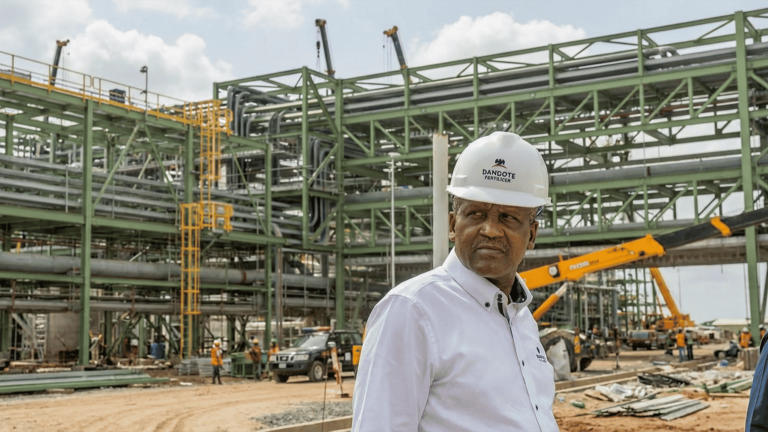
Africa’s richest man, Aliko Dangote, has announced plans to increase his group’s investment target across Africa from $50 billion to $70 billion, as part of efforts to expand industrial production, create jobs and address the continent’s electricity challenges.
Dangote disclosed this while outlining his Vision 2030 development ambition, stressing that increased investment in manufacturing, infrastructure and reliable electricity would be critical to unlocking Nigeria’s economic potential and accelerating Africa’s industrial growth.
He said the group initially planned to invest $50 billion but had now decided to raise the target to approximately $70 billion.
“We initially planned to invest $50 billion. We are now looking at increasing that to about $70 billion in Africa,” he said.
The industrialist also revealed that the group was considering a 10,000-megawatt electricity generation programme across Africa, potentially including Nigeria, to help address the persistent power shortages affecting businesses and economic activities.
According to him, inadequate electricity supply remains one of the biggest obstacles facing small and medium-sized enterprises (SMEs), particularly businesses that depend on petrol and diesel generators to operate.
Dangote explained that the high cost of alternative power generation makes it difficult for many small businesses to remain profitable, adding that access to reliable electricity is essential for building a productive economy.
He disclosed that the Dangote Group currently generates nearly 1,500 megawatts of electricity for its operations, with plans to increase its captive power generation capacity to between 4,500 and 5,000 megawatts by the completion of Vision 2030.
“Across the group, we currently have almost 1,500 megawatts. By the time we complete Vision 2030, that could rise to between 4,500 and 5,000 megawatts,” he said.
He explained that the proposed 10,000-megawatt programme would be a separate intervention aimed at supporting electricity generation across the African continent.
Dangote further argued that providing solar systems or alternative electricity sources for individual households and companies would not address the broader power challenge facing the economy.
He maintained that small and medium-sized businesses remain essential to economic development and require affordable, dependable electricity to survive and expand.
“Installing solar power for yourself does not mean the wider problem has been solved. Other people may not have that option,” he said.
The billionaire businessman also called on the government to create a favourable business environment through consistent economic policies, explaining that businesses would be more willing to invest and create employment opportunities when policies are predictable.
According to him, Nigeria possesses enormous entrepreneurial and economic potential but must address infrastructure deficits and policy inconsistencies to attract more investments.
He identified agriculture and solid minerals as sectors with significant opportunities, particularly in Northern Nigeria, noting that the country must move beyond exporting raw materials and begin processing them locally to generate greater economic value.
Dangote stressed that investments in critical infrastructure, including ports and transportation facilities, would help producers access markets and expand their businesses.
He said Africa must reduce its dependence on exporting unprocessed resources only to import finished products at significantly higher prices.
“It is not only about us; it is about Nigeria and the African continent. We should not simply export raw materials and then buy back the processed products at many times the price. That is the pattern we want to change,” he said.
Sharing lessons from his business journey, Dangote attributed the growth of his conglomerate to discipline, focus, financial prudence and the consistent reinvestment of profits.
He explained that the group’s transition from trading to manufacturing was a deliberate business decision based on products it already understood, supported by existing customers, distribution networks and market experience.
According to him, moving into manufacturing through backward integration was the logical next step, as it allowed the company to produce locally the products it had previously imported.
Dangote also advised entrepreneurs to exercise financial discipline, avoid spending profits before they are realised and recognise when a business venture is no longer commercially sustainable.
“Give it your best effort, but when you do the numbers and they are not adding up, you must be willing to leave,” he advised.
Despite the challenges confronting businesses across the continent, Dangote expressed confidence in Africa’s economic future, assuring that his group would continue investing in strategic sectors.
He also encouraged small businesses to take advantage of opportunities created by major industrial investments by positioning themselves as suppliers, manufacturers and service providers.
“People like us will continue investing. People like you can build businesses around those investments as suppliers, producers and service providers,” he said.
 NRS to Build Tax System That Supports and Drives Economic Growth in Nigeria— Adedeji
 NEPC Urges Kano Farmers to Process Soybeans for Export, Says Nigeria Losing Millions in Raw Produce Trade
 Niger State Hands Over 500 Hectares to Abuja Steel Mills for Solar Farm, Industrial Park
 Dangote Refinery Suspends Petrol Exports, Prioritises Nigerian Market Amid Operational Challenges
 Kebbi Unveils Investor-Friendly Reforms to Drive Economic Growth, Attract Investments
 Dangote Cement Deploys AI, Advanced Safety Systems as Truck Crashes Drop 56%