

 By Editor
 By Shariff Aminu Ahlan
Politics is often a contest of ideas, influence, and public perception. Success in public office naturally attracts praise from supporters and scrutiny from critics.
However, when criticism shifts from accountability to what appears to be a coordinated effort to discredit an individual, questions inevitably arise about the motives behind such attacks.
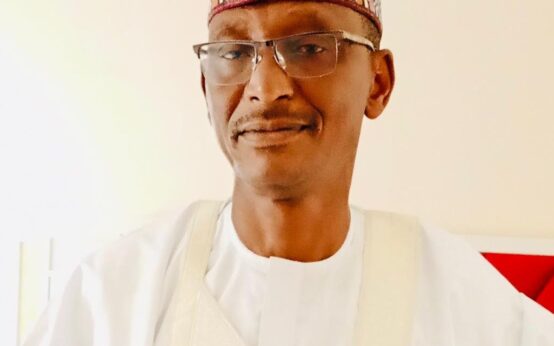
This appears to be the situation surrounding Commissioner Waiya, one of the most visible and widely discussed members of the Kano State Government. In recent months, he has become the subject of persistent criticism across various media platforms, particularly radio stations, where commentators have launched repeated attacks on his personality, performance, and place within the administration.
For many observers, the question is straightforward: Why Commissioner Waiya?
Why has a commissioner widely regarded by supporters as one of the administration’s most effective performers become the target of sustained hostility? Why is a public official known for his commitment to duty, loyalty to government policies, and engagement with stakeholders facing what some describe as a campaign aimed at undermining his reputation?
Many believe the answer lies in his growing influence and record of public service.
Since assuming office, Commissioner Waiya has built a reputation as a hardworking and results-driven administrator. His tenure has been marked by efforts to promote government policies, strengthen communication between the government and the public, and foster unity among media practitioners in Kano State.
Among his most notable achievements is the revival and strengthening of the historic Gauta Club, a platform that brought together media commentators and radio presenters from different backgrounds.
Through dialogue and engagement, the initiative helped reduce inflammatory rhetoric, personal attacks, and divisive political commentary that had become common in parts of the state’s media landscape.
Supporters argue that this intervention contributed significantly to restoring professionalism, civility, and responsible discourse within the media environment.
Equally noteworthy is Waiya’s widely acknowledged open-door policy. Unlike many public officials who are often perceived as inaccessible, he has maintained close engagement with journalists, political stakeholders, and ordinary citizens. Those who have interacted with him frequently describe him as approachable, accommodating, and willing to listen regardless of political affiliation or social status.
Over the years, numerous individuals and groups have reportedly benefited from his support, guidance, and interventions in addressing various challenges. Ironically, some of the most vocal critics today are individuals who were once considered beneficiaries of his goodwill.
This development has fueled speculation about the true motivations behind the attacks.
There is a growing perception among political observers that the criticism may not be entirely spontaneous.
Some believe that ambitious individuals seeking to occupy the commissioner’s position could be encouraging or sponsoring efforts to diminish his standing within the administration. Unable to rival his performance and public visibility, these actors are alleged to have turned to media campaigns designed to create controversy and weaken public confidence in him.
Their objective, according to supporters of the commissioner, is to portray failure where none exists and manufacture a crisis that could influence political decisions.
Despite the criticism, Governor Abba Kabir Yusuf has continued to demonstrate confidence in Commissioner Waiya.
This confidence is reflected not only in the responsibilities assigned to him within his ministry but also in his inclusion in key committees responsible for advancing the government’s development agenda.
Such appointments are often seen as indicators of trust, competence, and reliability. The governor’s continued reliance on Waiya has reinforced the perception that he remains a valued member of the administration.
For critics of the campaign against him, this growing confidence from the state’s leadership may explain the increasing intensity of the attacks. They argue that his rising profile and expanding influence have become sources of discomfort for political rivals.
History has repeatedly shown that public perception is ultimately shaped by performance rather than propaganda.
Public officials who consistently deliver results tend to earn the trust and support of the people, regardless of the volume of criticism directed at them.
Commissioner Waiya’s supporters point to his record of service, commitment to media harmony, accessibility to the public, and dedication to the Kano First Agenda as evidence of his contributions to the administration and the state.
As Kano continues its pursuit of development and progress, many believe that public discourse should focus on performance, accountability, and constructive criticism rather than politically motivated campaigns.
Whether the current attacks against Commissioner Waiya are driven by genuine concerns or political calculations remains a matter of debate. What is undeniable, however, is that his tenure has generated significant attention and discussion. For his supporters, his achievements and service record speak louder than the allegations of his detractors, and they believe that no amount of negative publicity can erase the impact he has already made.
Shariff Aminu Ahlan
APC Intellectual Warrior
realahlan0101@gmail.com
 THE END OF AN ERA, THE BEGINNING OF A MEMORY
  WOFAN,How Dr Salamatu Garba is turning human-capacity development into a lasting legacy
  NIGER STATE AT A CROSSROADS: AN OPEN APPEAL TO PRESIDENT TINUBU AND THE APC FOR ACCOUNTABILITY, GOOD GOVERNANCE AND POLITICAL RECONCILIATION
  DIG Mohammed Usaini Gumel: A Legacy of Excellence, Compassion and Selfless Service
  Beyond Boundaries of Charity: Dr. Salamatu Garba’s Quiet Revolution of Compassion, Partnership and Shared Prosperity
  Nigeria Must Shift Security Focus to 774 LGAs to Defeat Insecurity – Ex-DIG Gumel