
 By Editor
 By Ladan Nasidi
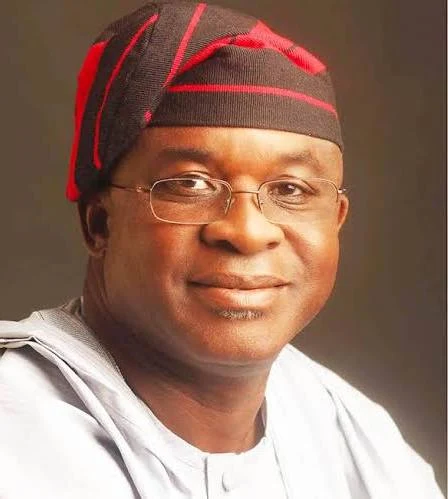
At 78, David Mark remains one of Nigeria’s most enduring figures in public service, widely regarded as a symbol of discipline, resilience, and unwavering commitment to national stability.
Born on April 8, 1948, in Otukpo, Benue State, Mark’s early life was shaped by rigorous military training at the Nigerian Military School and the Nigerian Defence Academy.
Rising through the ranks as a Signals officer, he distinguished himself through professionalism and strategic expertise, eventually becoming Director of Signals of the Nigerian Army.
As a young Major, he was appointed Chairman of the Abandoned Property Committee after the Nigerian Civil War, a role that required tact and fairness in addressing sensitive national issues. His leadership credentials further expanded when he served as Military Governor of Niger State and later as Minister of Communications, where he contributed to the development of Nigeria’s early telecommunications framework.
In 1994, Mark chose exile following a principled disagreement with the regime of Sani Abacha. He returned to Nigeria after the transition programme led by Abdulsalami Abubakar in 1998, underscoring his commitment to democratic ideals.
Mark’s most defining years came during Nigeria’s democratic era when he served as Senate President from 2007 to 2015 the longest in the nation’s history. Widely known as “Mr. Stability,” he guided the National Assembly through challenging political periods. His tenure was notably marked by the invocation of the Doctrine of Necessity during the health crisis of Umaru Musa Yar’Adua, ensuring continuity in governance.
Today, as a leading figure in the African Democratic Congress (ADC), Mark continues to play a significant role in Nigeria’s political landscape, offering experienced and measured leadership.
Known for his calm demeanor and disciplined approach, Mark has earned respect across political divides. His legacy lies not only in the offices he has held but in his ability to inspire confidence and promote stability.
His journey from military service to democratic governance mirrors Nigeria’s evolution, positioning him as a bridge between past and present, and a lasting symbol of principled leadership.
 CNG Prices to Remain Cheaper Than Petrol, LPG Despite Global Oil Market Tensions — Pi-CNG
  Abuja-Kaduna-Kano Highway to Boost Trade, Connectivity in Northern Nigeria — Umahi
  Kano Governor Yusuf Nominates Five Commissioner-Designates for Assembly Screening
  2027: ADC-PCC Urges Nigerian Youths to Reject Tinubu’s Re-election Bid
  DAVID MARK MOURNS EX-DELTA GOV UDUAGHAN
  Nigeria Customs, Afreximbank Deepen Regional Border Modernisation Drive to Boost AfCFTA Trade