
 By Editor
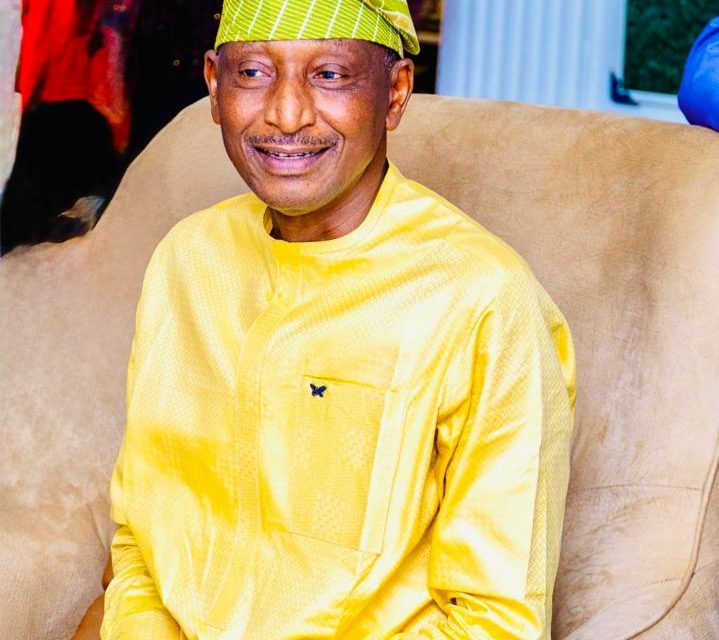
Retired Deputy Inspector-General of Police (DIG), Mohammed Usaini Gumel, has described the proposed establishment of state police as a major milestone in Nigeria’s security reforms, saying its passage through the National and State Assemblies represents a significant achievement of President Bola Ahmed Tinubu’s administration.
Gumel, a renowned security expert and National Security Coordinator of Project 774 Network, made this known while speaking on the need for decentralised policing to address Nigeria’s growing security challenges.
The retired police chief, who served in several strategic positions, including Commissioner of Police in Kano and Sokoto states, Assistant Inspector-General of Police in charge of Training and Development, and DIG in charge of the Force Intelligence Department, maintained that Nigeria’s security challenges require a policing structure capable of responding effectively to local realities.
He explained that the Federal Government had introduced several security reforms, including the expansion of military commands and the creation of four additional Army divisions in Makurdi, Ilorin, Jalingo and Benin City.
According to him, the expansion of military formations, alongside reforms within the Nigeria Police Force, is intended to strengthen operational capacity and improve responses to security threats across the country.
Gumel acknowledged that security agencies had recorded some gains in tackling terrorism, banditry, kidnapping, militancy, oil theft and organised criminal activities, although he stressed that significant challenges remained.
He noted that military and intelligence operations had increased pressure on criminal networks in the Niger Delta, South-East, North-West and North-Central regions.
He, however, cautioned against interpreting these developments as a complete victory over insecurity, insisting that government must continue to strengthen intelligence gathering, rescue operations, prosecution and protection of vulnerable communities.
Why Nigeria Needs State Police
On the establishment of state police, Gumel declared his support for the initiative, describing it as coordinated decentralisation rather than fragmentation of the country’s security architecture.
He argued that Nigeria’s size and diverse security challenges make it difficult for a centralised police structure to effectively address every security concern across the federation.
“Properly designed State Police Services can improve response time, local intelligence, rural coverage, crime prevention and public confidence.
“But my support is conditional. We should not multiply armed formations without common standards, sustainable financing, professional command and enforceable accountability,” he said.
He explained that state police should complement the Federal Police rather than compete with it, adding that both institutions must operate under clearly defined constitutional and legal responsibilities.
According to him, the Federal Police should retain responsibility for terrorism, interstate and transnational organised crime, trafficking, cybercrime and attacks on critical national assets, while state police should concentrate on neighbourhood policing, local crime prevention and rapid response.
He emphasised that Nigeria needs one coordinated national policing system with clearly defined operational responsibilities.
State Police Must Not Be Used for Political Victimisation
Addressing concerns that governors could use state police to intimidate political opponents and settle personal scores, Gumel said the success of the proposed system would largely depend on strong institutional safeguards.
He maintained that governors should determine broad security priorities and provide funding but must not interfere in individual arrests, investigations, prosecutions, releases or operational deployments.
“The law must separate strategy from operations,” he stressed.
He recommended protected tenure for state police commissioners, transparent appointment and removal procedures, independent complaints mechanisms, legislative oversight and judicial remedies.
He also called for strict penalties against political interference, noting that police officers must have legal protection when refusing unlawful directives.
Gumel said these safeguards would protect the police institution, political opponents, governors and the general public.
State Police Should Not Be Rushed Ahead of 2027 Elections
On when state police would become operational, the retired DIG said the process should not be dictated by the 2027 general elections.
He explained that constitutional approval alone would not automatically empower states to recruit officers, establish armories or begin policing operations.
According to him, each state must first demonstrate institutional, professional and financial readiness.
He identified transparent recruitment, integrity screening, accredited training, professional leadership, proper custody facilities, firearms control, independent oversight and sustainable funding as essential requirements.
Gumel further recommended regular inspections and periodic certification to ensure that state police institutions maintain acceptable professional standards.
He stressed that states that are not adequately prepared should continue relying on the Federal Police until they meet the necessary requirements.
National Policing Bill Must Provide Clear Guidelines
Speaking on the proposed National Policing Bill, Gumel said the legislation should establish a comprehensive operational framework for both federal and state police institutions.
He explained that the bill should clearly define jurisdiction, recruitment standards, certification, intelligence sharing, firearms management, custody procedures, public complaints, accountability and funding arrangements.
He also recommended the establishment of five key institutions to ensure effective administration of state police.
These include a State Police Service Commission, State Security and Policing Council, Independent Police Complaints and Accountability Commission, State Criminal Information and Intelligence Management Centre, and an accredited State Police Training Academy.
According to him, these institutions must enjoy genuine independence and adequate funding to prevent political manipulation and institutional weaknesses.
No Automatic Absorption of Vigilante Members
On whether existing vigilante personnel could automatically be absorbed into state police formations, Gumel answered in the negative.
He insisted that anyone seeking police powers must undergo transparent recruitment, identity verification, criminal-record checks, integrity screening and accredited professional training.
He acknowledged that community security groups possess valuable local knowledge and could assist with early warning, intelligence gathering and community engagement.
However, he warned that such experience should not replace professional training, merit-based recruitment and proper vetting.
“No person should exercise police powers outside the law, and no group should maintain an unregulated armory,” he cautioned.
States Must Demonstrate Financial Capacity
On the financial implications of establishing state police, Gumel argued that security should remain a priority for every government because peace and stability are fundamental to economic growth and development.
He, however, warned that the financial requirements go beyond purchasing patrol vehicles, uniforms and other equipment.
He said state governments must provide sustainable funding for salaries, pensions, insurance, training, police stations, communications, intelligence systems, equipment maintenance and independent oversight.
He recommended that every state seeking to establish its police service should present a comprehensive, independently assessed five-year financial sustainability plan.
According to him, states that cannot guarantee the welfare of personnel and the effective operation of their police institutions should not be certified to commence operations.
Gumel Identifies Jigawa as a Model of Community-Based Security
Speaking on the security situation in his home state, Jigawa, Gumel commended Governor Umar Namadi for what he described as a preventive and community-driven approach to maintaining peace and stability.
He said the state’s security management model was worthy of study by other state governments because of its emphasis on cooperation among security agencies, traditional rulers, religious leaders, community organisations and government institutions.
Gumel noted that the administration had prioritised dialogue, reconciliation and early intervention in resolving farmer-herder disputes and other community disagreements before they escalated into violence.
He also highlighted the provision of vehicles and motorcycles in November 2025 to strengthen security mobility, rural surveillance and rapid response.
According to him, the approach demonstrates the importance of combining effective government coordination with community participation and preventive security measures.
He, however, advised Jigawa and other states to remain vigilant against emerging threats, including cross-border criminal activities, trafficking, drug abuse and cybercrime.
He urged other state governments to study and adopt effective community-based security practices while ensuring that local security arrangements operate within the law.
Concluding, Gumel said the proposed state police system must be built on professionalism, accountability, adequate funding and respect for citizens’ rights.
He also reiterated Project 774 Network’s One-Metre-Square Principle, which encourages Nigerians to take responsibility for maintaining peace, lawfulness and vigilance within their immediate communities and to report credible security information through appropriate channels.
 Recruiting new nurses without retaining experienced professionals is an unsustainable workforce strategy.
 THE END OF AN ERA, THE BEGINNING OF A MEMORY
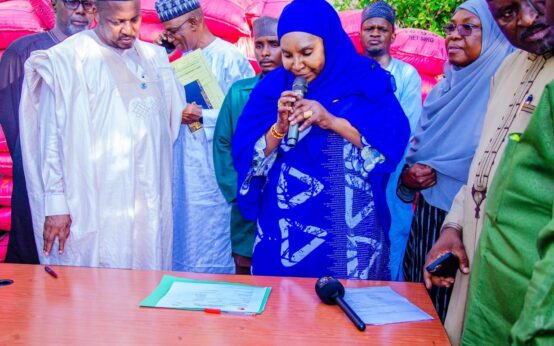 WOFAN,How Dr Salamatu Garba is turning human-capacity development into a lasting legacy
 NIGER STATE AT A CROSSROADS: AN OPEN APPEAL TO PRESIDENT TINUBU AND THE APC FOR ACCOUNTABILITY, GOOD GOVERNANCE AND POLITICAL RECONCILIATION
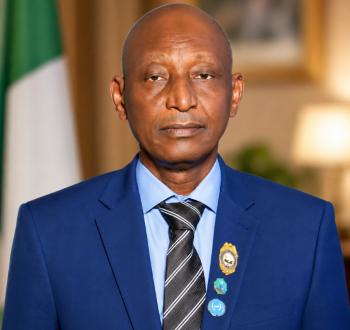 DIG Mohammed Usaini Gumel: A Legacy of Excellence, Compassion and Selfless Service
 Beyond Boundaries of Charity: Dr. Salamatu Garba’s Quiet Revolution of Compassion, Partnership and Shared Prosperity