

 By Editor
The Federal University of Education, Kontagora, Niger State, is set to commission 19 landmark projects on Nov. 28 as part of activities marking its convocation ceremony.
The projects cut across academic infrastructure, digital technology, student accommodation, healthcare, vocational education, agriculture, entrepreneurship and administrative facilities.
The development represents another milestone in the institution’s transformation from a teachers’ training college established in September 1978 into a full-fledged university with an expanding mandate in teacher education, research, innovation and human capital development.
At the centre of this institutional transformation is the leadership of the university’s pioneer substantive Vice-Chancellor, Prof. Faruk Rashid Haruna, who assumed office on Nov. 10, 2025.
Haruna’s appointment followed years of administrative involvement in the institution, having previously served as Provost of the Federal College of Education, Kontagora, from April 2018.
19 Projects to Transform Academic Activities
Among the major projects scheduled for commissioning is the Sa’idu Namaska Library Complex, which is expected to strengthen the university’s academic and research capacity.
Others include the Muhammad Barau Mu’azu II Registry Complex, Faculty of Arts and Social Sciences Administrative Block, Faculty of Sciences Administrative Block and the Early Childhood Care and Primary Education Complex.
The university is also expanding its digital infrastructure through the Abdullahi Idris Garba (Mai Solar) 1,000-capacity ICT Building, aimed at promoting digital learning and improving students’ access to technological resources.
Similarly, the Sabi Abdullahi 500-capacity Laboratory Complex and the Mohammed Umaru Bago 1,000-capacity Lecture Theatre will support practical training and academic activities in the Faculty of Vocational and Technical Education.
Other facilities include the Abubakar Sani Bello Home Economics Laboratory Complex and a renovated Language Laboratory to strengthen practical instruction and professional skills development.
Investment in Agriculture and Entrepreneurship.
In a move to promote practical education and agricultural enterprise, the university has established a Fish Hatchery to support research, vocational training and aquaculture development.
The facility is also expected to provide opportunities for students to acquire practical knowledge in fish production while contributing to food security and potential revenue generation.
The Entrepreneurship Centre Complex and renovated Career Centre are additional facilities designed to strengthen students’ entrepreneurial abilities and prepare graduates for employment and self-reliance.
Improved Students’ Welfare and Accommodation
The projects also address students’ welfare and accommodation needs through the construction of a Male Students’ Hostel, Postgraduate Hostel and an extension of the University Clinic.
Other facilities include a 1,000-capacity Multifunctional Hall, Renewed Hope Experience Hall and a 650-capacity Lecture Theatre for the Faculty of Arts and Social Sciences.
The facilities are expected to improve the university’s capacity to accommodate academic activities, conferences, social engagements and other institutional programmes.
Haruna’s Administrative Experience
Prof. Faruk Rashid Haruna is a Professor of Exercise and Sports Science who received his academic training at Ahmadu Bello University, Zaria.
He began his academic career as an Assistant Lecturer at the university in 1989 and rose through the academic ranks before attaining professorial status in 2007.
His administrative experience includes serving as Director of Sports at Ahmadu Bello University and Provost of the Niger State College of Education, Minna, for eight years.
He subsequently became Provost of the Federal College of Education, Kontagora, in April 2018, before the institution was elevated to university status in October 2024.
His appointment as the first substantive Vice-Chancellor therefore marked a continuation of his involvement in the institution’s transition and development.
Beyond Infrastructure Development
Although the 19 projects represent a significant expansion of the university’s physical infrastructure, their long-term impact will depend on effective utilisation, maintenance and sustained investment.
Adequate staffing, research funding, modern teaching equipment, digital connectivity and improved welfare for students and workers will remain essential to achieving the institution’s academic objectives.
The commissioning ceremony on Nov. 28 is expected to provide an opportunity for the university community and stakeholders to reflect on its journey from a Federal Advanced Teachers’ College established in 1978 to its present status as a federal university.
For Prof. Haruna, the occasion marks an important point in his leadership journey, with the projects providing a foundation for the institution’s next phase of development.
Ultimately, the university’s lasting achievements will be measured not only by its infrastructure but also by the quality of graduates it produces, its contributions to research and innovation, and the opportunities it creates for future generations.
 Customs Suspends Training Activities Amid Talks With Federal Character Commission
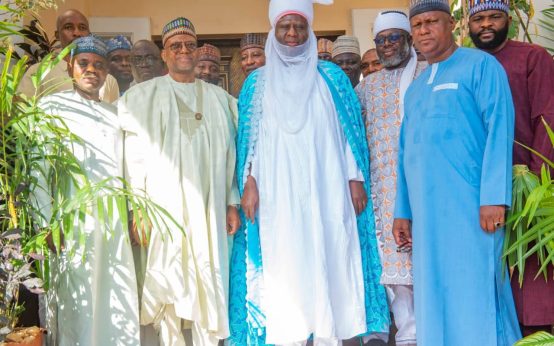
 Niger Deputy Governor Leads Stakeholders to Visit Sani Musa
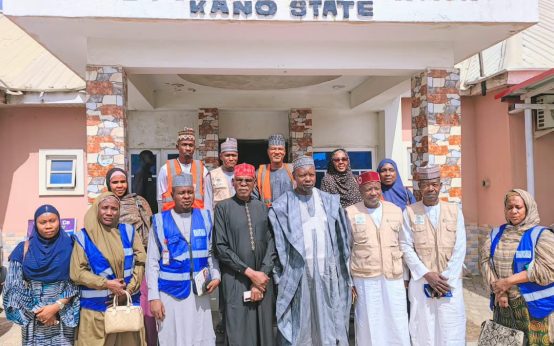 Kano Commissioner Applauds Gov. Yusuf Over Renovation of Ɗorayi Rehabilitation Centre
 The Senator representing Kano South Senatorial District, Senator Suleiman
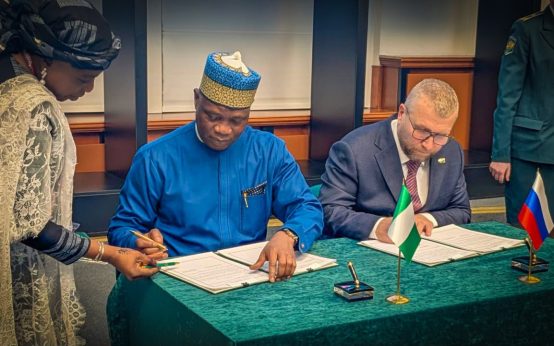 Nigeria, Russia Sign Customs Pact to Boost Trade, Intelligence Sharing
 Senator Sani Musa Seeks Urgent Action on Report into Death of 37 Niger Miners