
 By Editor
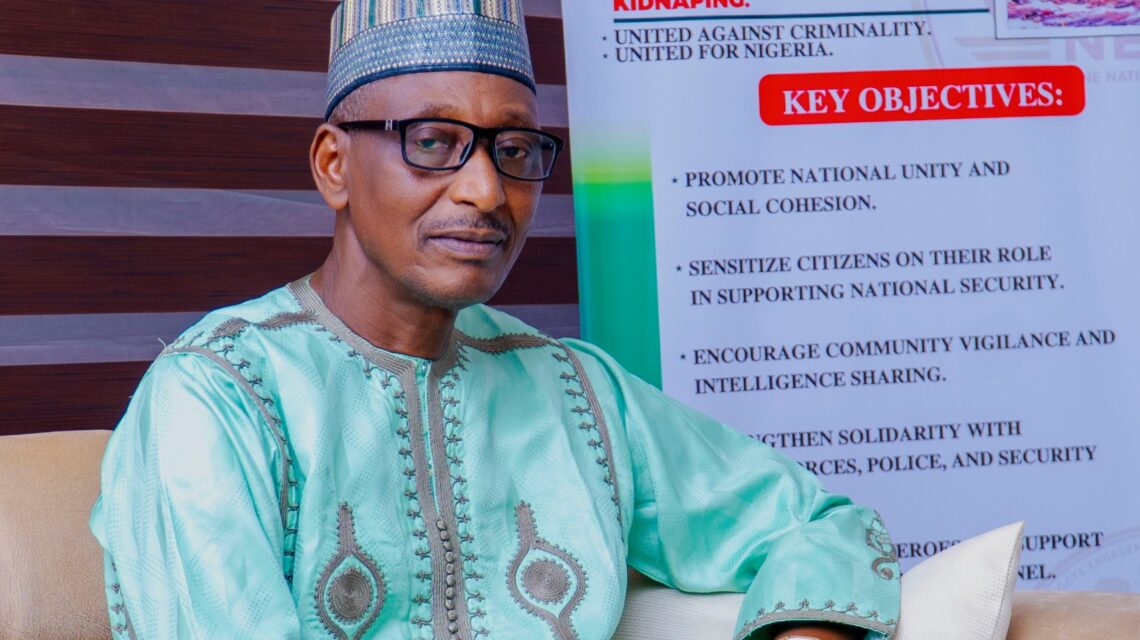
 Retired Deputy Inspector-General of Police, Alhaji Mohammed Usaini Gumel, has called for a prompt, transparent and independent investigation into the reported deaths of 37 suspected illegal miners while in the custody of the Nigeria Security and Civil Defence Corps (NSCDC) in Niger State.
Gumel, a former Assistant Inspector-General of Police and DIG in charge of the Force Intelligence Department, described the incident as a serious security and human-rights matter, stressing that every person in state custody remains protected by law.
He expressed condolences to the families of the deceased and called on investigators to establish the circumstances surrounding each death.
«“One death in custody demands explanation; 37 deaths demand the highest level of scrutiny,” Gumel said.»
According to him, investigators must determine how the arrests were carried out, the conditions under which the suspects were detained, their medical conditions, the precise cause and time of each death, and whether any officer or commander acted unlawfully or negligently.
He said the Federal Government’s decision to establish an independent committee, suspend affected personnel and preserve relevant evidence was an important first step, but stressed that the credibility of the process would depend on its implementation.
Investigators must have unrestricted access
Gumel said investigators should have unrestricted access to custody registers, arrest records, duty rosters, communication logs, medical records, surviving detainees and officers involved in the operation.
He also called for protection of witnesses and proper preservation of evidence, saying forensic and medical conclusions should be reached by qualified professionals.
“The independence of the investigation process will be judged by conduct, not merely by the committee’s title,” he said.
He further urged representatives of affected communities and civil society organisations to monitor the process, arguing that no institution should simply investigate itself and expect the public to accept an untested conclusion.
Establish cause of every death
Gumel said the investigation should establish who authorised the operation, where and when each suspect was arrested, how many detainees entered custody alive, the condition and capacity of the detention facility, who supervised them and whether adequate food, water, ventilation and medical attention were provided.
Investigators, he added, should also establish when signs of distress were first noticed, what action officers took and whether any records were altered or evidence concealed.
On conflicting claims about the cause of the deaths, Gumel advised against treating unverified explanations as established facts.
“Claims of illness, suffocation, assault, chemical exposure or any other cause must be tested through proper forensic and medical examination,” he said.
NSCDC’s powers over illegal mining
Gumel said the NSCDC could arrest suspects of illegal mining within the limits of its enabling law, while stressing the distinction between the Corps’ powers and those of the Ministry of Solid Minerals Development.
He explained that the Nigerian Minerals and Mining Act 2007 places regulation, inspection and direct enforcement of mining operations primarily under the ministry responsible for solid minerals, particularly through the Mines Inspectorate and authorised officers.
The NSCDC, he said, derives its powers from its own enabling legislation, which includes responsibilities for protecting critical national assets and infrastructure, as well as powers to arrest, detain and investigate within its lawful mandate.
He added that the Mining Marshals operate as a specialised NSCDC unit under an inter-agency arrangement with the Ministry of Solid Minerals Development to combat illegal mining.
However, he emphasised that the power to arrest “is never a power to punish.”
Suspected illegal miners still have rights
Gumel rejected arguments that the deceased were responsible for their fate because they were suspected of illegal mining.
He acknowledged that illegal mining poses economic, environmental and security challenges but said allegations of criminal conduct could not remove a suspect’s constitutional rights.
“Illegal mining must be confronted, but a suspected offence does not remove a person’s constitutional rights,” he said.
Accountability must follow the evidence
On who should be held responsible if negligence is established, Gumel said investigators should examine the entire chain of command, including arresting officers, detention personnel, supervisors, medical personnel where applicable and commanders who authorised or supervised the operation.
He said suspensions and protective custody should only be regarded as temporary administrative measures designed to protect the investigation and must not replace criminal proceedings.
Where evidence establishes criminal conduct, he said those responsible should be prosecuted through due process and given a fair trial.
Compensation and support for families
Gumel urged authorities to accurately identify the deceased and notify their families with dignity.
Where state responsibility, negligence or unlawful conduct is established, he said affected families should receive appropriate compensation and other forms of redress.
He stressed, however, that financial compensation could not substitute for truth, accountability and reforms designed to prevent similar incidents.
Calls for custody reforms
To prevent future deaths in custody, Gumel advocated enforceable national custody standards across all security and law-enforcement agencies.
He recommended accurate electronic and physical detention registers, lawful surveillance systems, occupancy limits, adequate ventilation, access to water and medical screening, regular supervisory inspections and clear emergency procedures.
He also called for independent, unannounced inspections of detention facilities and mandatory external reviews whenever a death occurs in custody.
Gumel backs Police Duty Solicitor Scheme
As an immediate practical measure, Gumel advocated the full activation and strengthening of the Police Duty Solicitor Scheme (PDSS).
According to him, the scheme provides arrested persons with early access to legal assistance, facilitates review of arrests and detention conditions, and provides an additional safeguard against unlawful or prolonged detention.
Gumel said he witnessed the practical benefits of the scheme while serving as Commissioner of Police in Kano State from 2023 to 2024, describing it as useful in improving coordination and lawful custody management.
He urged authorities to extend the scheme effectively to detention facilities operated by security agencies across the country.
“Accountability strengthens security”
Gumel warned that poor handling of the incident could undermine public confidence in the NSCDC and other security institutions.
He argued, however, that transparent investigations should not be viewed as attacks on security agencies.
“Supporting the NSCDC or any security agency does not mean excusing possible misconduct. Equally, defending the rights of detainees does not mean supporting illegal mining,” he said.
He added that accountability could protect professional officers, strengthen command structures and improve public trust.
Final message
Gumel said a credible investigation should identify every deceased person, establish the medically supported cause and circumstances of each death, explain the chain of events and identify those responsible where the evidence permits.
He also called for criminal, disciplinary and administrative action where appropriate, compensation for affected families and reforms with clear implementation deadlines.
His message to investigators, government and Nigerians was that the facts must be established quickly and independently.
“Nigeria must continue to fight illegal mining and other threats to national security, but our security agencies must always act within the Constitution and the law.
“Supporting security agencies does not mean excusing misconduct, and defending human rights does not mean supporting crime. Accountability and effective security must go together.”
 Customs Concludes 2025 Recruitment Screening, Nearly 3,000 Candidates Assessed
  HJRDA MD Celebrates Remi Tinubu at 66, Highlights Women Empowerment
  Kano Drug Task Force Arrests 380 Suspects, Secures 230 Convictions in Two Months
  SEN. SANI MUSA HAILS REMI TINUBU AT 66
  Kwankwaso Offers to Forgive, Reconcile With Kano Governor Abba Yusuf
  Who Ordered the Arrest of 37 Niger Mining Detainees? Questions Beyond the Cells