
 By Editor
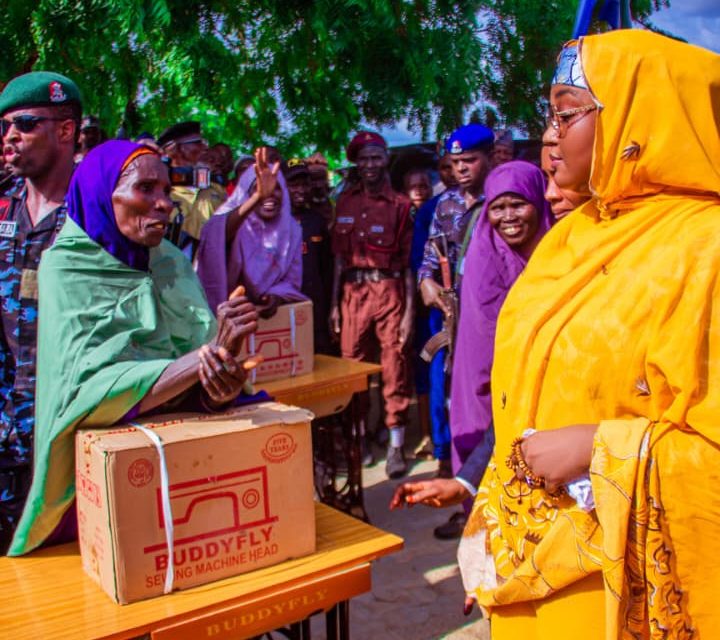
 In a bid to promote economic self-reliance among vulnerable women, Her Excellency, Amb. Dr. Amina Umar A. Namadi, has distributed livelihood support equipment to women in Garki, with particular attention to widows and parents caring for orphaned children.
The intervention, which included sewing machines and grinding machines, is aimed at helping beneficiaries establish small businesses and develop sustainable sources of income.
Rather than offering temporary relief, the initiative provides practical tools that beneficiaries can use to generate income and support their families over the long term.
For widows struggling to meet household needs and parents responsible for the care of orphaned children, the equipment could provide a pathway to greater financial independence. Sewing machines, for example, can enable beneficiaries to venture into tailoring, while grinding machines can support small-scale food processing and other income-generating activities.
The empowerment programme forms part of Dr. Amina Namadi’s broader efforts to improve the welfare of women and other vulnerable members of society through economic empowerment.
By providing livelihood opportunities, the initiative seeks to strengthen the ability of beneficiaries to meet their needs and support their families, while reducing dependence on external assistance.
The programme also highlights the important link between women’s economic empowerment, household welfare and community development. When vulnerable women have the tools and opportunities to earn an income, the impact can extend to their children, families and the wider community.
For the women who received the equipment in Garki, the intervention represents more than the distribution of machines. It offers an opportunity to rebuild livelihoods, preserve dignity and work towards a more secure future.
Beneficiaries and community members expressed appreciation for the gesture, offering prayers for Dr. Amina Namadi and calling for the programme to be sustained and expanded to reach more vulnerable people.
As Jigawa State continues to pursue initiatives aimed at improving the wellbeing of its citizens, programmes that combine social support with economic empowerment could play a vital role in helping vulnerable households transition from dependence to self-reliance.
Ultimately, the success of the Garki intervention will be measured beyond the distribution ceremony — by the businesses beneficiaries establish, the income they generate and the families they are able to support with the opportunities created through the programme.
 Nigerian Entrepreneur Expands Samado Juice to 56 Outlets in Saudi Arabia
  First Lady’s RHI Distributes Food, Cash Support to Vulnerable Groups in Bauchi
  Jigawa 2027: Amina Namadi Deepens Women’s Grassroots Mobilisation for APC
  DCG Tijanni Abe Takes a Bow After 35 Years of Meritorious Service
  Emir of Gaya Orders Zero Tolerance for Drug Abuse, Trafficking
  Kano at 17.5 Million: How Governor Yusuf Is Preparing the Ancient City for Megacity Status