
 By Editor
 By Ladan Muhammad Garko
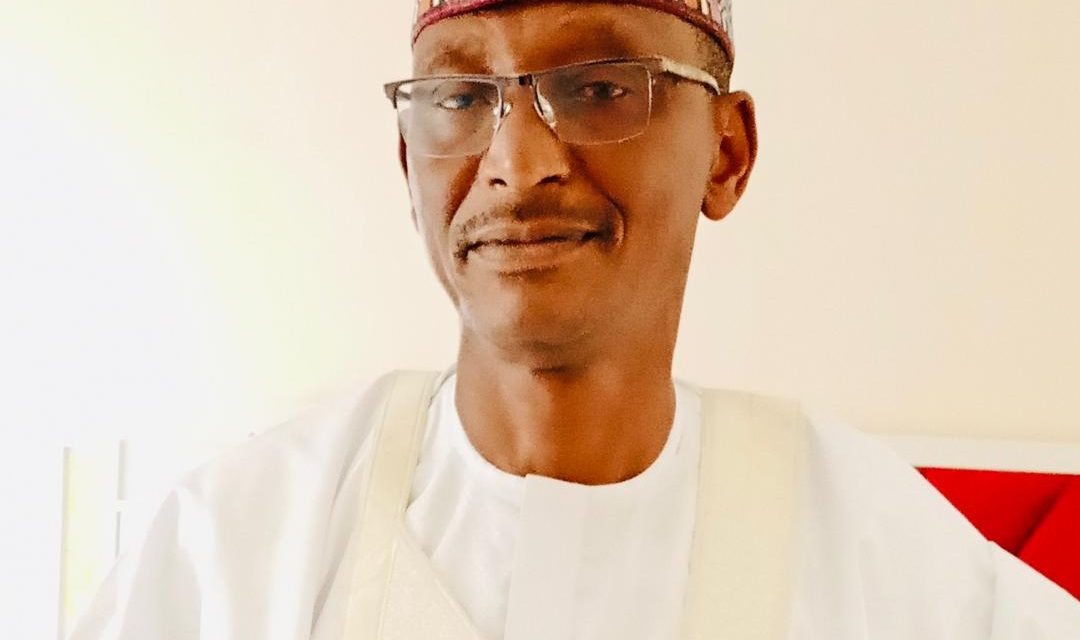
A retired Deputy Inspector-General of Police, Mohammed Usaini Gumel, has called for a major overhaul of Nigeria’s security architecture, urging the Federal Government to make the country’s 774 Local Government Areas the foundation of its national security strategy.
Gumel, a retired Deputy Inspector-General of Police and public policy contributor on policing, democratic governance and security sector reform, said Nigeria’s persistent insecurity requires a new approach that prioritises community-based intelligence, decentralised policing and stronger local security structures.
According to him, despite decades of heavy investment in the fight against terrorism, banditry, kidnapping, communal violence and organised crime, insecurity continues to evolve across the country.
He attributed the challenge to an over-centralised security framework, arguing that while insecurity has national consequences, its roots remain largely local.
“Criminals do not emerge from nowhere.
They are recruited, supplied and sheltered within communities, and operate across forests, villages, border settlements and highways located within Nigeria’s 774 Local Government Areas,” he said.
Gumel stressed that although national security institutions provide strategic leadership, the actual battle against crime is fought at the grassroots where criminal activities take place.
He proposed that every Local Government Area should develop a comprehensive security profile detailing its unique threats, vulnerable communities, criminal routes, flashpoints, illegal arms circulation, drug networks and emerging security risks. Such intelligence, he argued, would enable authorities to move beyond broad state-wide security assessments to more targeted, community-specific interventions.
The retired police chief also advocated the establishment of functional Local Government Security Councils comprising security agencies, traditional rulers, religious leaders, women, youths, farmers, herders, transport unions and other credible community stakeholders to strengthen intelligence gathering, early warning systems and conflict prevention.
He further called for greater investment in police divisions across the country, noting that many operate with inadequate manpower, poor mobility, insufficient communication equipment and limited operational resources.
“A police division that cannot respond promptly cannot effectively protect lives and property,” he stated.
On the ongoing debate over policing reforms, Gumel argued that Nigeria’s size and diversity make decentralised policing inevitable. He said federal and state police structures can coexist under constitutional safeguards that ensure professionalism, operational coordination, accountability, respect for human rights and protection from political interference.
He also urged the government to formally regulate neighbourhood watch groups and vigilante organisations through proper registration, training, vetting and supervision to enable them complement formal security agencies without becoming partisan or unregulated forces.
Beyond law enforcement, Gumel emphasised the need to tackle the underlying socio-economic factors driving insecurity, including youth unemployment, drug abuse, poor education, communal conflicts, weak infrastructure and inadequate government services.
He maintained that security and development must go hand in hand if Nigeria is to achieve lasting peace.
The retired DIG also called for sustained efforts to reclaim forests, border communities, mining corridors and other ungoverned spaces that have become safe havens for criminal groups through intelligence-led operations, technology-driven surveillance and stronger inter-agency collaboration.
He further urged governments at all levels to adopt measurable indicators for evaluating security performance, including response time, reduction in violent crimes, successful prosecution of offenders, recovery of illegal arms, public confidence and adherence to the rule of law.
Gumel expressed confidence that Nigeria possesses the institutions, human resources and resilient communities needed to overcome its security challenges but insisted that success depends on placing citizens and local communities at the centre of national security planning.
“The road to a safer Nigeria does not begin or end in Abuja. It begins in every ward, every community and every one of our 774 Local Government Areas,” he said.
He concluded that empowering local governments to become active partners in safeguarding their communities remains the most sustainable path to addressing Nigeria’s security challenges.
“If we secure the 774 Local Government Areas, we secure Nigeria.”
About the Author
DIG Mohammed Usaini Gumel (Rtd), FSPSP, FIPMA, psc, is a retired Deputy Inspector-General of Police and a public policy contributor on policing, democratic governance and security sector reform in Nigeria. He is also the National Secretary of Project 774 Network for Asiwaju.
.
 THE END OF AN ERA, THE BEGINNING OF A MEMORY
  WOFAN,How Dr Salamatu Garba is turning human-capacity development into a lasting legacy
  NIGER STATE AT A CROSSROADS: AN OPEN APPEAL TO PRESIDENT TINUBU AND THE APC FOR ACCOUNTABILITY, GOOD GOVERNANCE AND POLITICAL RECONCILIATION
  DIG Mohammed Usaini Gumel: A Legacy of Excellence, Compassion and Selfless Service
  Beyond Boundaries of Charity: Dr. Salamatu Garba’s Quiet Revolution of Compassion, Partnership and Shared Prosperity
  State Police: Why Nigeria Should Learn From History—Not Be Held Back by It