
 By Editor
 By Ali Sabo
Dakwa is the kind of community that can easily be overlooked in Nigeria’s digital story.
Located along the Zuba–Dei-Dei–Zuma corridor of the Federal Capital Territory, the agrarian community is only about 29 kilometres from Abuja, yet proximity to the nation’s capital has not always translated into access to reliable and affordable internet. For many residents, particularly young people, accessing the opportunities of the digital world meant looking beyond their immediate environment.
That is beginning to change.
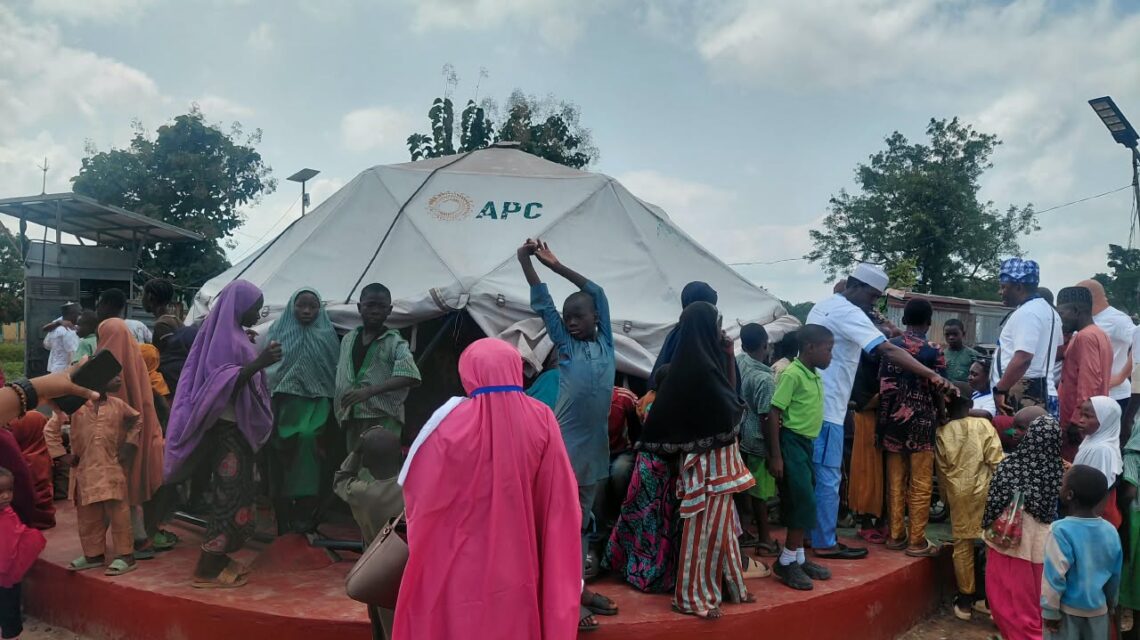
Through the efforts of the Centre for Information Technology and Development (CITAD), the Association for Progressive Communications (APC), Hello World and 48 Percent, a community network and internet hub was established in Dakwa, bringing affordable connectivity closer to residents and creating a space where people can use the internet for learning, communication and accessing opportunities.
But the real story of the Dakwa Community Network is not the infrastructure. It is what the people of Dakwa are beginning to do with it.
During a recent visit to the community, the District Head of Dakwa, Alhaji Shuaibu Samu, described the intervention as a “life-changing opportunity” for residents.
His description is rooted in what the community experienced before the hub came into existence.
“Before the establishment of this facility, access to reliable and affordable internet was a major challenge for our people.”
For a community increasingly connected to a world where education, employment, communication and access to information are moving online, that challenge carries consequences. Being offline or poorly connected does not simply mean having no internet. It can mean missing opportunities that others take for granted.
Today, Samu says the situation is changing.
“Now, our youths can access information, learn new skills and explore opportunities online without having to travel far from the community.”
That statement captures perhaps the most important change taking place in Dakwa: the world of opportunities is becoming physically closer to the people who live there.
A window beyond Dakwa
For Ismail Shuaibu, a Community Champion at the hub, the facility has already become part of the community’s daily life.
He explained that young people now use the hub to study, search for jobs, access online opportunities and communicate with others.
“Many young people now come here to study, search for jobs, access online opportunities and communicate with others.”
These may sound like simple activities. But in a community where reliable and affordable internet was previously a major challenge, they represent something much bigger.
A young person who comes to the hub to search for a job is no longer limited to opportunities advertised within the community. A student who comes to study can access information and learning resources that may not be available locally. Someone looking for information can reach beyond the boundaries of Dakwa and engage with a much wider world.
In that sense, the community network is not merely connecting devices. It is expanding people’s horizons.
From a project to a community asset
Perhaps equally important is the way residents are beginning to see the facility.
Ismail explained that the hub operates through a community-driven model, with users paying a small fee that contributes to maintaining the equipment and keeping the service running.
“The idea is for the community to see this as its own facility. The small amount paid by users helps us maintain the equipment and provide the service continuously.”
This is significant.
Many development interventions struggle after external support ends because the communities that benefit from them were not sufficiently involved in their ownership or management. Dakwa is attempting a different path: making the community part of the solution.
The District Head has also called on residents to take ownership of the facility and support efforts to keep it operational.
That sense of ownership could ultimately determine whether the digital opportunity created in Dakwa becomes a temporary intervention or a lasting community institution.
The real measure of digital inclusion
Dakwa’s experience offers a broader lesson about digital inclusion in Nigeria.
For years, discussions about the digital divide have often focused on infrastructure, broadband coverage and the number of people connected to the internet. These are important measures, but they do not tell the whole story.
The more important question is: What changes when people get connected?
In Dakwa, the early answers are emerging from the residents themselves: young people are studying, searching for jobs, accessing opportunities, communicating and becoming more familiar with digital tools and online services.
The organisations that helped bring the community network into existence deserve recognition for creating that opportunity. But the most important voices in determining its impact are those of the people who now use it.
And their testimonies suggest that something deeper than internet access is taking place.
Dakwa is beginning to discover that distance does not necessarily have to determine opportunity.
A young person can live in a community outside the centre of Abuja and still search for employment online. A student can access learning resources without travelling to the city. A resident can communicate, find information and explore opportunities that were previously difficult to reach.
That is what meaningful connectivity should ultimately achieve.
The success of Dakwa’s community network will not be measured simply by how many people connect to it. It will be measured by how many possibilities people discover because they can.
And perhaps that is the most important transformation happening in Dakwa: the internet is not only bringing the wider world into the community. It is giving the people of Dakwa a stronger opportunity to reach out and participate in that world.
Ali Sabo is the Campaign and Communication Officer of the Centre for Information Technology and Development and can be reached at asabo@citad.org
 ADUSTECH Partners CITAD’s Tree-Planting Campaign, Donates 20,000 Seedlings
  FG Expands CNG Drive to Universities, Targets Cheaper Transport for Students
  Customs CGC Adeniyi Signs Anti-Corruption Framework, Activates ICRAM Steering Committee
  2027: Sumaila Condemns Political Thuggery, Drug Abuse in Election Campaigns
  CELEBRATING 68 YEARS OF LIFE, LEADERSHIP AND SERVICE
  Kano Govt Backs NIPR, Plans Permanent Facility Ahead of World PR Forum