

 By Editor
 By Ladan Muhammad Garko
The Centre for Information Technology and Development (CITAD) has unveiled DComms, a decentralised and privacy-focused digital platform designed to offer users an alternative to mainstream social media platforms dominated by global technology companies.
The organisation also raised concerns over the growing threats to digital privacy, warning that the concentration of power among a handful of Big Tech companies poses significant risks to users’ data ownership, online freedom and privacy.
Speaking on Thursday during a sensitisation workshop for students of Maryam Abacha American University of Nigeria (MAAUN) in Kano, CITAD Project Lead, Buhari Abba, said the initiative was part of the organisation’s commitment to promoting open-source technologies and empowering users with greater control over their digital lives.
The workshop focused on data privacy, online safety and the dangers associated with the misuse of social media.
Abba said the increasing dominance of a few global technology companies had sparked concerns over data ownership, content moderation and users’ ability to control their online experiences.
According to him, the operators of the world’s largest social media platforms have amassed unprecedented influence over digital interactions by collecting and controlling vast amounts of users’ personal data.
“Social media is something you do not necessarily go to school to learn; much of it is learned as you go,” he said.
“Unfortunately, many people fall victim to harassment and blackmail because they are unaware of how these platforms operate.”
He encouraged students to make informed decisions about their online activities and consider alternative digital ecosystems such as DComms, which, he said, promotes user autonomy, privacy and community participation.
Delivering a presentation titled “Big Tech vs. the Fediverse,” CITAD technical engineer Yusuf Babagana highlighted how major platforms such as Facebook, X and Instagram continue to dominate the digital landscape.
He noted that the concentration of digital services in the hands of a few companies limits competition and gives them significant influence over how information is distributed, how users interact online and how personal data is collected and monetised.
Babagana warned that the data-driven business models of many mainstream social media platforms have made user privacy increasingly vulnerable.
He also identified online threats such as identity theft, phishing attacks, cyber scams, reputational damage and cyberbullying, urging students to adopt safer online practices.
According to him, decentralised platforms within the Fediverse offer stronger privacy protections, greater user control and community-based moderation, providing a more transparent and user-centred digital environment.
During the workshop, another member of the CITAD technical team, Suhail, conducted a live demonstration of the organisation’s Fediverse server, guiding participants through account creation and showcasing the platform’s key features.
The Head of the Department of Mass Communication at MAAUN, R.Y. Suleiman, commended CITAD for organising the workshop and described it as timely, given the growing concerns over digital privacy and cybersecurity.
He urged students to take data protection and online safety seriously while expressing optimism about sustained collaboration between the university and CITAD.
Suleiman also encouraged participants to remain vigilant online and embrace digital platforms that prioritise privacy, security and greater user control.
 Aliyu Samba Presents Appointment Letter as A4A Parliamentary Mobilisation Secretary to Sen. Barau
 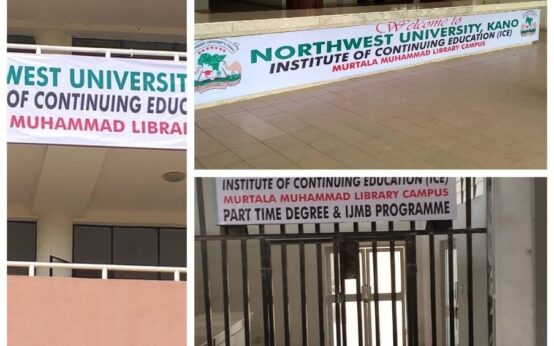 Kano Library Complex Transfer Will Boost Higher Education — NWU
  Customs Concludes 2025 Recruitment Screening, Nearly 3,000 Candidates Assessed
  37 Deaths in NSCDC Custody: Investigators Must Establish Truth, Justice — Retired DIG Gumel
  HJRDA MD Celebrates Remi Tinubu at 66, Highlights Women Empowerment
  Kano Drug Task Force Arrests 380 Suspects, Secures 230 Convictions in Two Months