
 By Editor
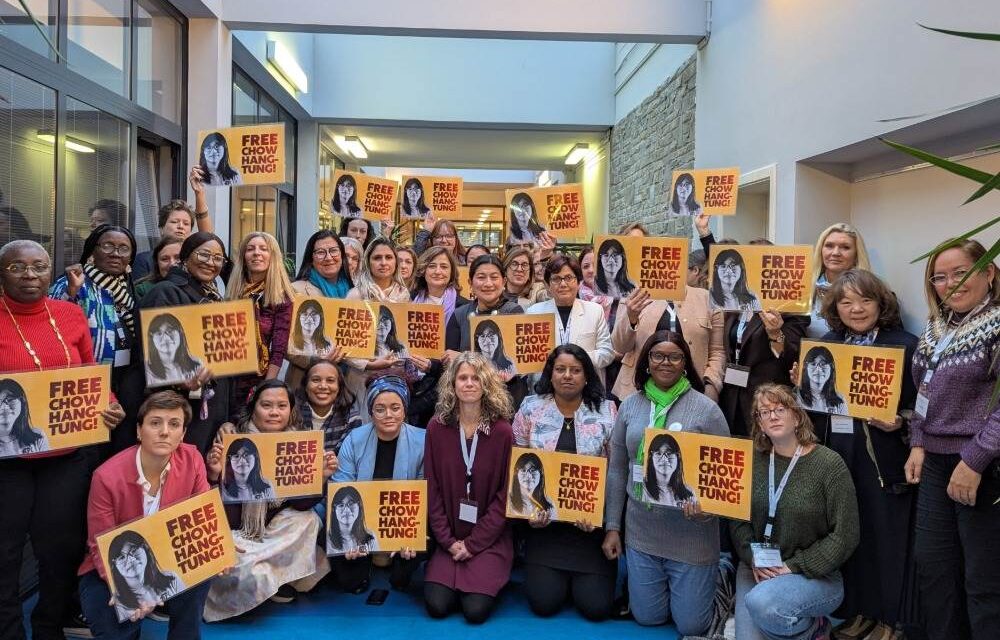
 As the world marks International Women’s Day on March 8, 2026, the celebration comes at a critical moment marked by a growing global backlash against gender equality, democratic labour rights, and fundamental human rights.
Advocates warn that rising discrimination, racism, and violence against women in many parts of the world threaten decades of progress toward equality.
Against this backdrop, access to justice for women has emerged as a cornerstone for strengthening democracy, peace, and social justice. Ensuring that women can seek legal protection, participate fully in public life, and work in safe environments remains a key priority for governments, civil society, and international organisations.
This year’s observance also draws attention to the plight of women caught in the midst of conflict and humanitarian crises.
Global attention has been focused on women and girls affected by ongoing wars and unrest in countries such as Ukraine, Gaza Strip, Sudan, and Iran, where women often face displacement, violence, and limited access to essential services.
Observed annually on March 8, International Women’s Day honours the social, economic, cultural, and political achievements of women worldwide while highlighting the ongoing struggle for gender equality. The day also serves as a global platform to encourage action toward building a more inclusive and equitable society.
The roots of the observance date back to the early 20th century when women across industrialised nations began organising campaigns for better working conditions, voting rights, and fair wages. The first National Women’s Day was celebrated in the United States on February 28, 1909, organised by the Socialist Party of America to support women workers’ rights.
A year later, in 1910, the idea of a global day dedicated to women’s rights was proposed by German activist Clara Zetkin during the International Socialist Women’s Conference held in Copenhagen, Denmark. Her proposal gained widespread support and laid the foundation for what is now recognised worldwide as International Women’s Day.
Historically, the movement was fuelled by activism and protest. Women in Europe and North America challenged unfair labour practices, unsafe working conditions, and the lack of political representation. These early struggles not only helped secure rights such as suffrage and workplace protections but also inspired global recognition of women’s contributions to society.
Today, International Women’s Day is observed in countries across the globe through educational seminars, cultural programmes, advocacy campaigns, and policy discussions. The events celebrate the achievements of women while addressing persistent challenges including gender discrimination, wage gaps, violence against women, and underrepresentation in leadership and decision-making positions.
For governments and institutions, the day serves as a reminder of the need to expand opportunities for women, promote equality in leadership roles, and invest in education, training, and economic empowerment programmes. For individuals and communities, it is an opportunity to recognise and appreciate the everyday contributions of women from families and workplaces to science, politics, and the arts.
Ultimately, the significance of International Women’s Day lies not only in celebration but also in action. By highlighting achievements and confronting ongoing challenges, the day encourages societies to reflect on progress made and the work that remains.
As the world observes International Women’s Day in 2026, the message remains clear: advancing women’s rights is essential to building a fair, peaceful, and prosperous world where women and men can thrive equally.
 Kano Government Ramadan Feeding Programme Creates Jobs, Boosts Local Economy
  FG Approves 100% Gratuity for Retiring Federal Civil Servants Starting 2026
  FRSC deploys senior officers to Kano for sensitisation on discipline, operational efficiency
  David Mark Celebrates Obasanjo at 89, Hails His Enduring Service to Nigeria
  Dr. Amina Umar Namadi Distributes Sallah Clothes to 2,000 Orphans, Widows in Jahun LGA
  Gov Yusuf Hails Tinubu Over ₦334bn Kano–Kongolom Road Upgrade, Says Project Will Transform Northern Trade Corridor